Category: Uncategorized

Imagining the Possibility of Safety

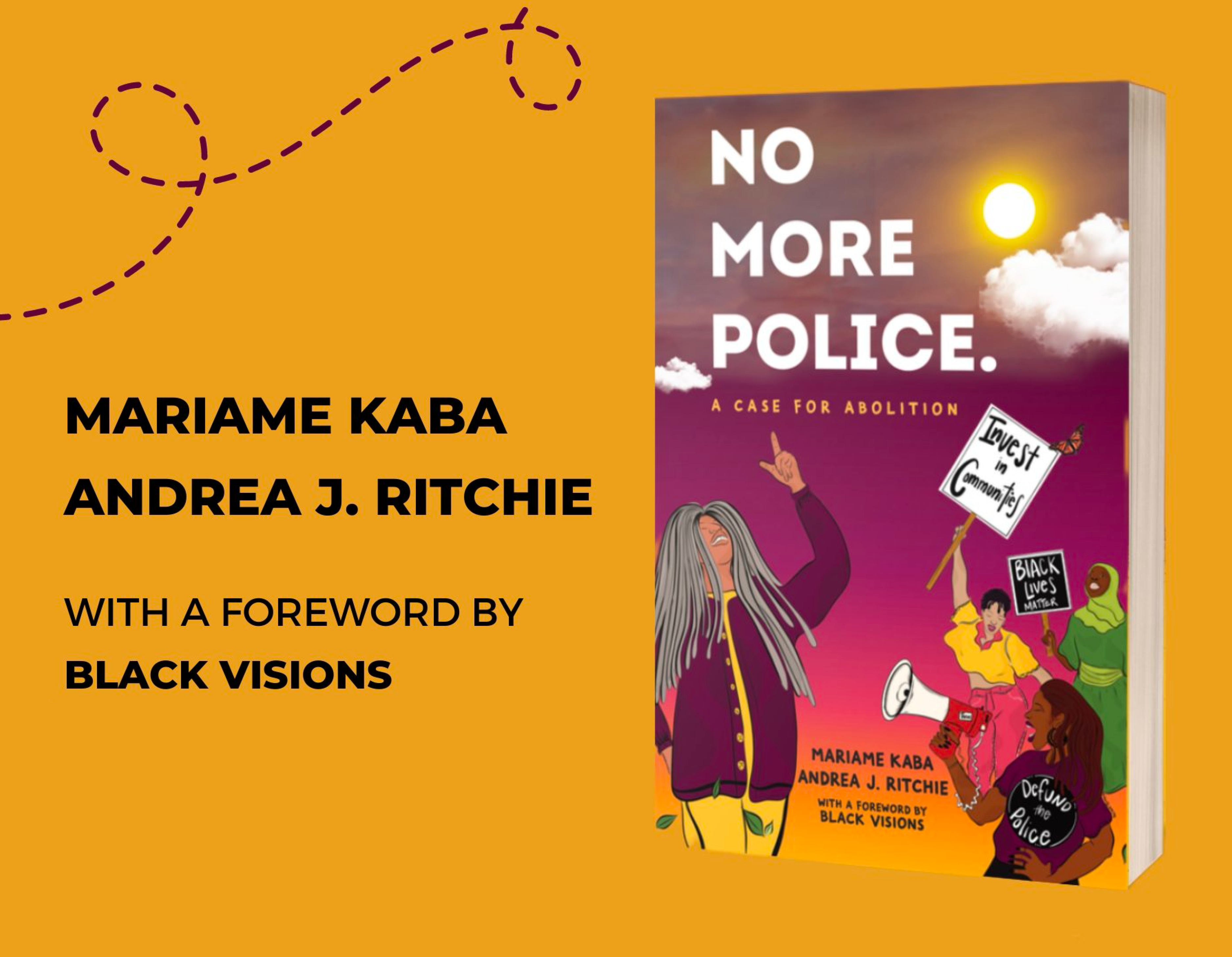
book cover with illustrations of black women protesting

At the beginning of the summer, our executive director, Jamila Hodge, sat on a panel in a crowded gymnasium in Newark talking about transforming the justice system. 

“The system is going to do what it’s going to do,” she said. “It is a machine, and it was built for a purpose, and that was to oppress and control Black people.”

As a former prosecutor, Jami knows this truth intimately. The only woman on the stage, she shared elements of her struggle to do good within the system, her complicity in perpetuating harm, and ultimately her decision to join the movement for community-centered solutions to violence. That decision, she said, starts and ends with understanding “that those closest to the problem are closest to the solution, and must be closest to power.”

The movement is and has been led by survivors, most often Black women directly impacted by violence in communities and by the violence of policing and incarceration. Two survivors and movement leaders that we can turn toward right now are Mariame Kaba and Andrea Ritchie, who recently published No More Police: A Case for Abolition, worth a read by anyone interested in the possibility of a world in which violence is rare.

No More Police was born out of decades of survivor-led community organizing and in the wake of uprisings and campaigns that arose from the murder of George Floyd by Minneapolis police officers. Black women wanted more than the failed promise of justice from our criminal legal system. “We demand more,” write Kaba and Ritchie. “Our communities deserve more. We demand transformation.” 

Kaba and Ritchie begin the book with the movement history of the moment we’re in, lending their platform to Minneapolis-based organizers Miski Noor and Kandace Montgomery from Black Visions. Noor and Montgomery offer a front-row seat to the years of organizing for safety and healing in Minneapolis that created the conditions for organizations to mobilize and make sure that all of us know George Floyd’s name.

That movement history is important because it cuts through noise that #DefundThePolice was a spontaneous slogan that instantly went viral. It’s a history that Kaba and Ritchie expound, reaching back decades through flashpoints that have invited more and more people to question the idea that policing and public safety are synonymous. Ultimately, they challenge us with a more fundamental question: how do we make a world in which everyone has access to safety?

Safety is not just the absence of violence, it is the presence of well-being. Because of our years of work with communities in Newark, Baton Rouge, and across the country, we know that it takes an ecosystem of services, interventions, and institutions rooted in community, equity, and healing to create safety. While police are unquestionably connected to that ecosystem today, the questions we should ask now are 1) does the institution of policing increase or decrease safety, and 2) does policing need to be part of that ecosystem forever?

Kaba and Ritchie are clear that their answer to the first is that police contribute to violence more than they do to safety, and their answer to the second is no. The core argument in the book – that policing cannot be reformed, so it must be abolished – flows from an understanding that the criminal legal system is not broken, it’s doing exactly what it was designed to do. The violence of policing is not a flaw that can be fixed or a feature that can be minimized; violence defines both the root intention and the only set of tools available. 

They write, “This is about recognizing that policing is a virulent force that must be addressed head-on—and about so much more: healing justice, transformative justice, and transformation toward a better world.” Instead of focusing on reform, we should put our creativity, time, and resources toward the community-centered safety and healing initiatives that work.

Kaba and Ritchie meticulously lay out the case that cops don’t stop violence, and in fact that has never been the purpose of policing. Police, they remind us, “are violence workers: policing, at its core, is about securing compliance through force, threat of force, or deprivation.” If our goal is to create safety, we need to start with other tools altogether. Fortunately, survivors and community-led groups have been building those tools for generations. From community-based violence intervention and prevention to mental health services, housing, and healthcare – what we would call a community-centered ecosystem – these programs and tools are effective and should be resourced.

There’s no question that this book offers provocative ideas and questions. There will be some people who will read the title and turn away. Maybe that’s okay. But if you care about public safety, if you recognize that most violence impacts Black and other marginalized communities, and if you’re tired of seeing the criminal legal system sustain the same harms that it always has, then you should consider reading No More Police

It’s a roadmap not so much for implementing new programs, but for struggling together toward safety, healing, and equity. Each chapter is full of insights and questions, lessons and provocations, none of which are above critique. Ultimately, this book is an invitation to listen, to dream, to connect, and to experiment. Most of all, Kaba and Ritchie ask us to act, to start where we are, imagine the possibility of safety, and get to work together. The communities with whom we partner and our vision of a world in which violence is rare demand that we do just that.

Filed under: Uncategorized

In Grief, She Took Action
jane syieda mona bonnita

We lost a member of the EJUSA family last week. Bonnita Spikes was a force, a fierce and fearless organizer whose impact on communities across Maryland and beyond is immeasurable. Every time Bonnita told her story, people listened. Her strategic vision, her warmth, and her persistence helped to end the death penalty in Maryland and expand services for families of homicide victims. She shaped the way that we think about survivors and showed us that healing trauma needs to be central to our work. 

Bonnita was also my friend. I loved her very much. 

A shattering personal experience changed Bonnita’s path forever, eventually joining mine in the work of our lifetimes. In 1994, 19 years before Maryland finally ended the death penalty, Bonnita lost her husband of 23 years and father of their four boys when Michael Spikes was murdered during a conveninence store robbery. 

As she recounted over and over again, she felt the rage and grief-driven urge for revenge when she saw her husband’s body. She soon realized that that drive was only prolonging her pain. Police never found the person who killed Michael, and even if they had, she wouldn’t have wanted to see them die, too. 

As Bonnita and her family spiraled into economic hardship, and her 13-year-old son’s devastation drove him to attempt suicide, she found no answers or support from a system claiming to bring her justice. So she did what every true organizer does: she acted. 

In the face of overwhelming loss and a state that consistently fails murder victims’ families, she protected her family, found the people and the resources she and her sons needed to heal, and began to build power with other survivors to ensure that nobody would have to go through what they’d experienced.

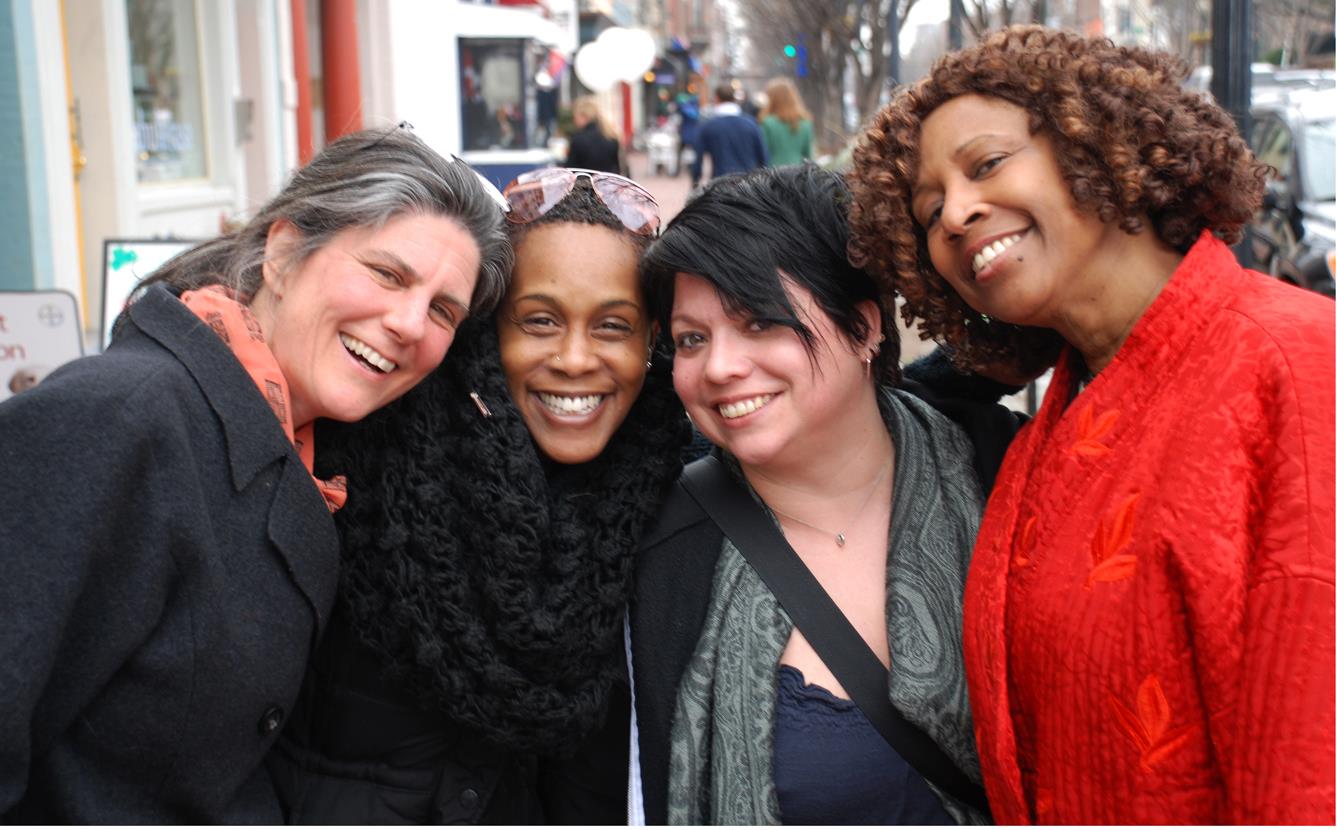
bonnita and mona

I met Bonnita nearly 20 years ago, just before she became the first organizer for Maryland Citizens Against State Executions (MDCASE), dedicated to supporting and uplifting the needs of families of homicide victims. We spent years side by side on the MDCASE core team dreaming and scheming ways to meet the needs of survivors cast aside by a system that calls itself justice. She was brilliant and relentless every legislative session. She was grounded and nurturing every time we lost, full of abundant kindness and creativity, and there for all of us, always ready to fight again, next time even smarter. 

In March of 2013, nearly a decade after she started, and just moments before members of the Maryland state legislature finally voted to end the death penalty, several said on record that the reason they were voting for repeal was because of Bonnita Spikes. 

Bonnita and I spent a lot of time together, attending events throughout the state, giving former Maryland Senate President Mike Miller a whole lot of headache in Annapolis, and generally causing trouble. One day we were trying to track down the powerful Senate President, our long time foe who always managed to be everywhere and nowhere. This day, we were walking across the frosty Annapolis quad and he was, at the other end of the quad, walking right towards us. We all locked eyes in a frozen moment, he twinkled a silent greeting, turned on his heels, and walked the other way. It was so fast we stopped in our tracks. She looked at me and said, “Mona, he knows who we are now. We’re either in trouble or we’re winning”. A few weeks later we would win in the Senate. 

Through all of it, everything for Bonnita always came back to families. As she said in her testimony to the state senate in 2013 about the dozens of people who she had met who had lived through the murder of a family member, “I have found among us strong, wonderful people who have filled me with a sense of grace and gratitude. But I have found more murder victims’ family members who are struggling, alone, with few places to turn for help.” Bonnita made sure family members were connected with each other and to the work we were doing in the legislature. She fought to make sure they’d never feel alone again.

Bonnita’s commitment was to the people left behind by systems unconcerned with survivors, especially young, poor, Black, and other marginalized survivors. She was my partner when we went back to the Maryland legislature the year after we ended the death penalty to create an accessible, sustainable state fund to support families of homicide victims. She demanded that the state create a lifeline for the people who need it most. And we won again. 

For so many of us, Bonnita was a lifeline herself. She brought charm, righteousness, and humility to every space. She was a powerful woman amongst powerful women, and she informed my thinking about power and organizing. She changed the way we organize, not to simply replace death-making systems with other death-making systems, but to transform the system altogether so that it might heal and nurture our communities. Bonnita wanted to make all of us safer. 

I love you, Bonnita. I am so grateful to have had an opportunity to be in your presence as a fellow fighter and a goofy friend. Your devotion, ferocity, and love changed us forever. You will forever be in our hearts and our work.

Filed under: Uncategorized

What Is Trauma-Informed Policing? 

trauma to trust

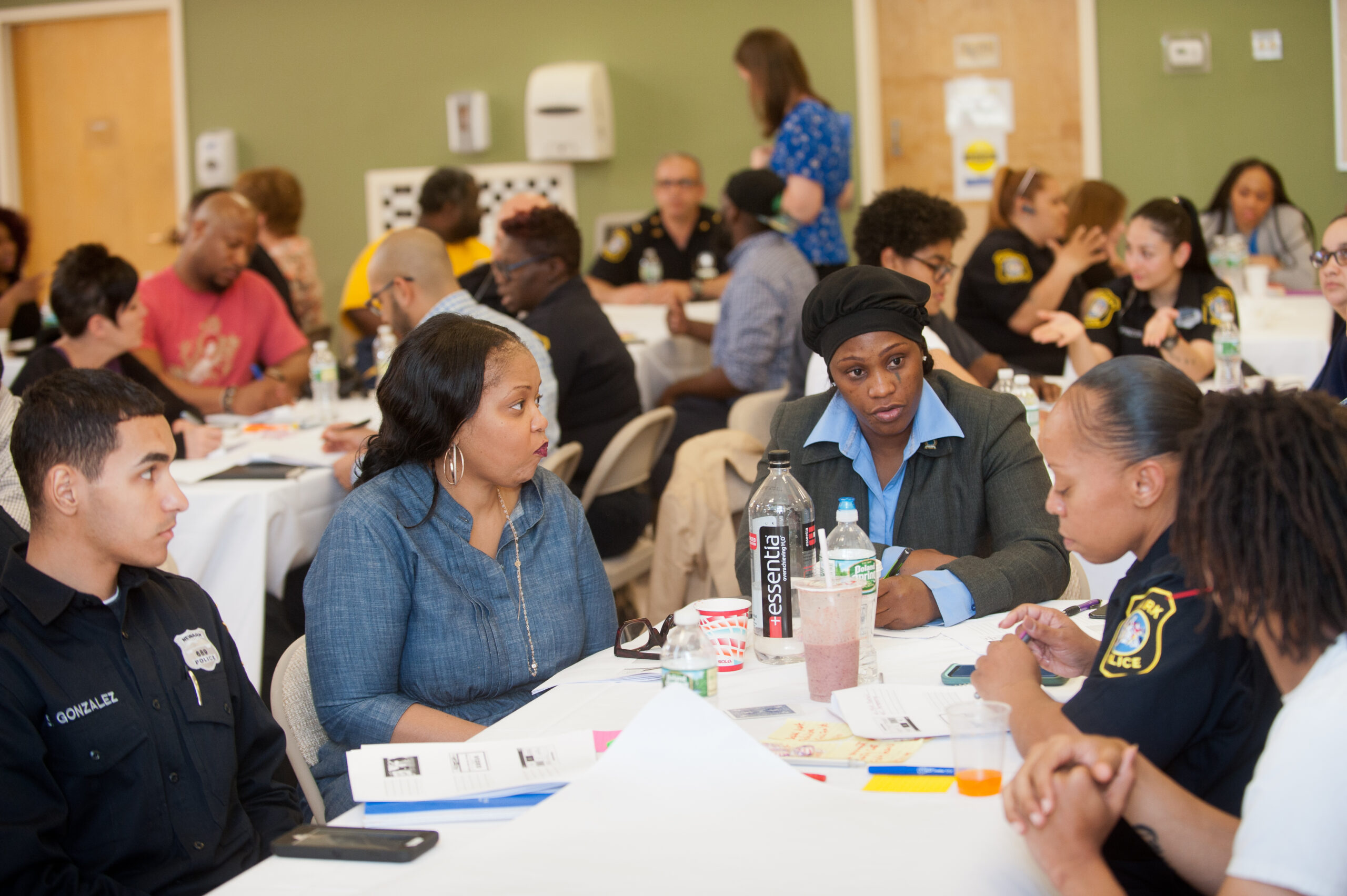
Six Newark, NJ, residents and five police officers sit in a semi-circle in a local community center. They’re listening as a Black man, mid forties, recounts a tale of being hit in the head by a police officer as a teenager while hanging out with his friends after school. As he finishes his story, he leans back, arms crossed, anger present as if the beating had occured yesterday.  

An officer from across the room speaks. “I know I wasn’t the officer that was there that day, but I wanted to apologize for what happened to you.” 

A shift occurs in the room. The middle-aged man’s arms unfold, his frown loosens, and tears begin to flow. 

“That’s trauma,” says a different officer. He, like the other 10 people in the room, knows much more about trauma — what it is, how it shows up — having spent hours in Equal Justice USA’s Trauma to Trust. 

The program spans two days, eight hours each day, and brings together community members and law enforcement officers for an intimate workshop that aims to help both sides understand what trauma is and how it operates in community and police interaction. 

The big picture goal is to help police identify and respond appropriately to trauma in their daily interactions with community members. We call it “trauma-informed policing.” When it’s successful, police are better equipped to create safety from the very first interaction they have with an individual.

These trainings have been taking place in Newark since 2015. The mayor and police leadership want the entire police department to be “trauma-informed.” The effect of the training is evident when police understand why a 30-year-old event, like the one recounted above, triggers such a strong reaction from community members. The impact of the training occurs when an officer realizes that an apology is due, even if they were not the person who directly caused the harm. Trauma to Trust is about behavior change that can come from understanding trauma. 

Our aim is to change the relationship between community and law enforcement in order to truly create cities that are just and safe. We do that through teaching officers about the history of policing in Black and Brown communities, about how trauma shows up in the body and particularly in perpetually policed communities, about the secondary trauma impacts police officers themselves, as well as strategies and techniques for healing trauma. 

At Equal Justice USA, we believe that true justice equals safety, healing, and accountability that repairs. Acknowledging harm and its resulting trauma can put an end to the cyclical model of our current criminal legal system that causes more harm by focusing solely on punishment. Trauma-informed policing is one element used to address this transformation in our approach to safety and justice. 

What is Trauma? 

Trauma results from one or more events, or set of circumstances, experienced by an individual as physically or emotionally harmful, threatening, or shocking. The event or circumstances have lasting adverse effects on the individual’s functioning and physical, social, emotional, spiritual, or other varying aspects of a person’s general well-being. Seventy-one percent of adults have experienced some form of victimization and trauma in some capacity. When compounded with other sociological factors — like poverty, racism, and mental health struggles, all of which inflict trauma — that number increases. 

  Training police to interact with community members with the assumption that they have experienced trauma can help to eliminate re-traumatIzation or unnecessary harm. For individuals in high-stress situations, such as being stopped by a police officer, trauma can show up in three ways: 

  • Flight — the desire to run or avoid engagement — A trauma-informed approach does not assume this behavior is an admission of guilt. Instead, it’s viewed as potentially a natural response to a stressful situation.
  • Freeze — the forgetting of important details of a situation, an inability to focus, or tuning out a conversation. On the surface, a police officer could read these behaviors cas hostile or uncooperative, when they are normal responses to trauma or stress. When officers read them as trauma responses, they can respond accordingly and not cause further trauma for the individual.
  • Fight — hostile behavior, including widened eyes or increasingly angry or irate speech. By viewing “fight” indicators with trauma in mind, officers can help alleviate the immediate threats causing these behaviors and help bring citizens back to a more centered, present state.

Like other universal protocols, such as wearing gloves when handling blood, officers behaving in a trauma-informed manner when engaging with citizens can mitigate conflict, excessive force, and other traumatic behaviors exhibited by police. While there will always be police officers with ill intentions and tendencies toward harm — even when seeded by trauma they themselves once experienced — teaching law enforcement to consider and respond appropriately to trauma creates the possibility of changing culture for long-lasting progress. 

How does trauma-informed policing different from other attempts at police reform? 

Trauma-informed policing trains officers to recognize trauma responses and how they show up in individuals. 

Police can acknowledge trauma-induced behaviors through some simple practices. For example, they can provide water and space for individuals to breathe once they are safely constrained, or they can offer information and context for a person who is triggered when it is safe to do so. This produces an added benefit, as officers have a better environment in which to do their job and build safety

The results in Newark speak for themselves. Since 2016, the Newark Police Division has been a regular participant in community-driven public safety roundtables to discuss safety measures and understand community concerns. Citizen complaints against officers has shown a demonstrable decrease. And in 2020, Newark police did not fire a single shot. Social workers are now employed alongside police officers to cases that require additional supports. Community-based organizations in Newark are proactively providing resources and services to individuals who have experienced harm to prevent retaliation, recidivism, and to reduce crimes of necessity. These and other fundamental shifts in policing are what it means to be trauma-informed. While we know that there is no one, quick solution for creating safety, we recognize that addressing trauma lies at the heart of the solution.

Filed under: Uncategorized

Just what I needed

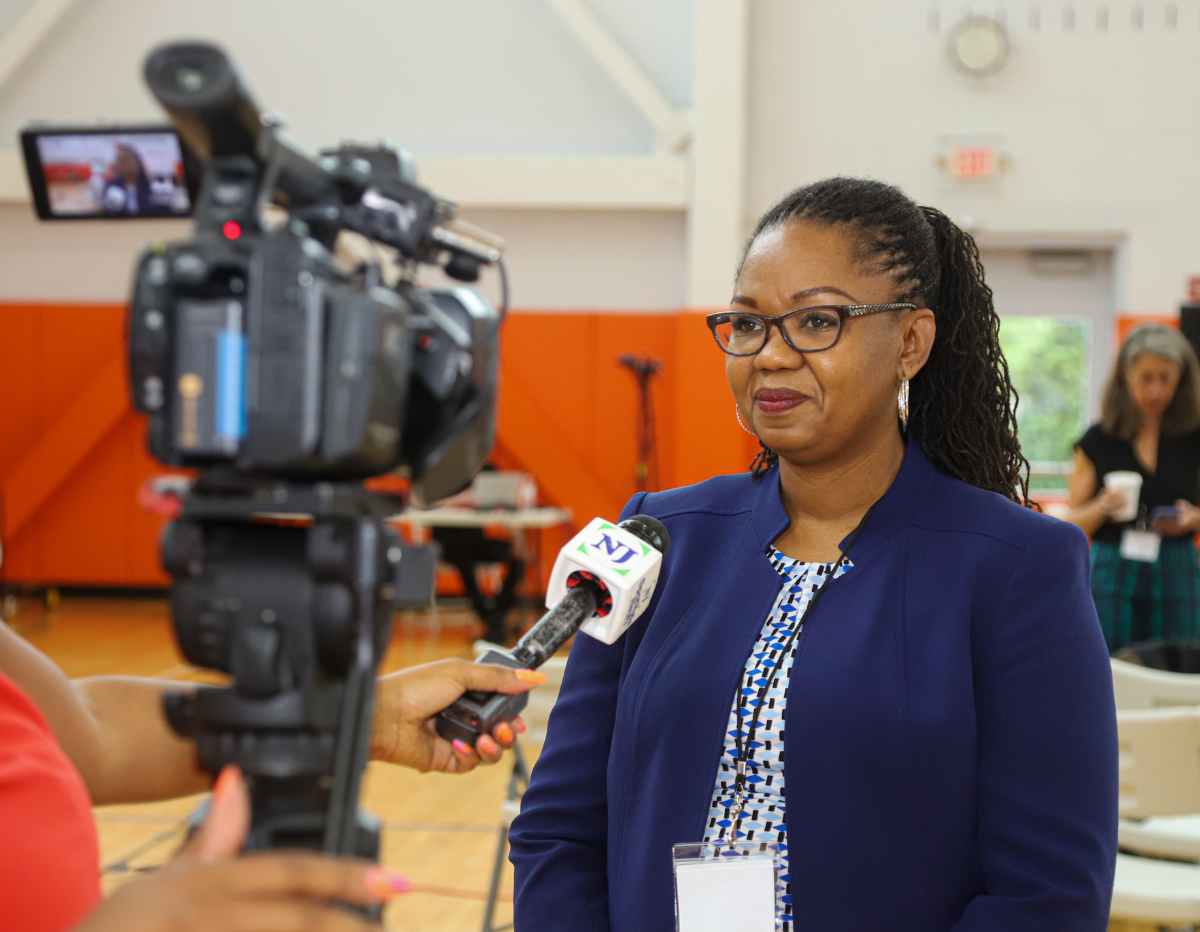
Jami Hodge in front of camera and mic

Earlier this month, I celebrated my one-year anniversary at EJUSA in very special company. I attended a forum with brilliant, inspiring people who are changing their communities—our world—every single day. 

I didn’t know until I was there that it was exactly what I needed. 

This year has been as hard as it has been amazing. Joining this team and building a new system in which justice heals and repairs instead of punishes and harms is truly an honor. But it’s stressful, demanding work. And I’ll freely admit that I’ve had to navigate some fear and insecurity. 

That’s why being in this room on the day marking my first year was thrilling and rejuvenating. I found myself surrounded by bold, creative people doing the on-the-ground work that transforms lives. Leaders who had started their own organizations with just passion and an understanding of what their people needed. Leaders who are survivors — of violence, of prisons and punitive systems — serve their neighbors and make their communities stronger every day. 

I left that room with an overwhelming desire to do more, to go deeper into our mission supporting the on-the-ground work. We — the team at EJUSA and you who have invested in our work — have the privilege every day of supporting efforts that make communities safe and help people thrive.

When I say deeper, I simply mean that I want to liberate myself from that fear. I want to boldly call out the systemic racism that hurts all of us. I want to think big and imagine without constraints. I believe we are on the cusp of something momentous. And I want you with us every step of the way. 

Our mission commitment begins with a sacred responsibility to support and heal the healers — the folks leading and serving in their community every day. 

We’ve never felt more confident in showing the world what a community-based public safety ecosystem looks like…and what it takes to build one. 

We feel certain that the body of people able to imagine an entirely different justice system is larger than ever. And that system will abolish forever the idea that executions make us safer, and embrace the understanding that we are safe when communities are empowered and resourced to thrive.  

I can’t wait to share our new strategic plan with you soon. I think you will agree that EJUSA’s vision has never been sharper or more fearless.

Filed under: Uncategorized

Punitive Systems Only Create More Cycles of Trauma
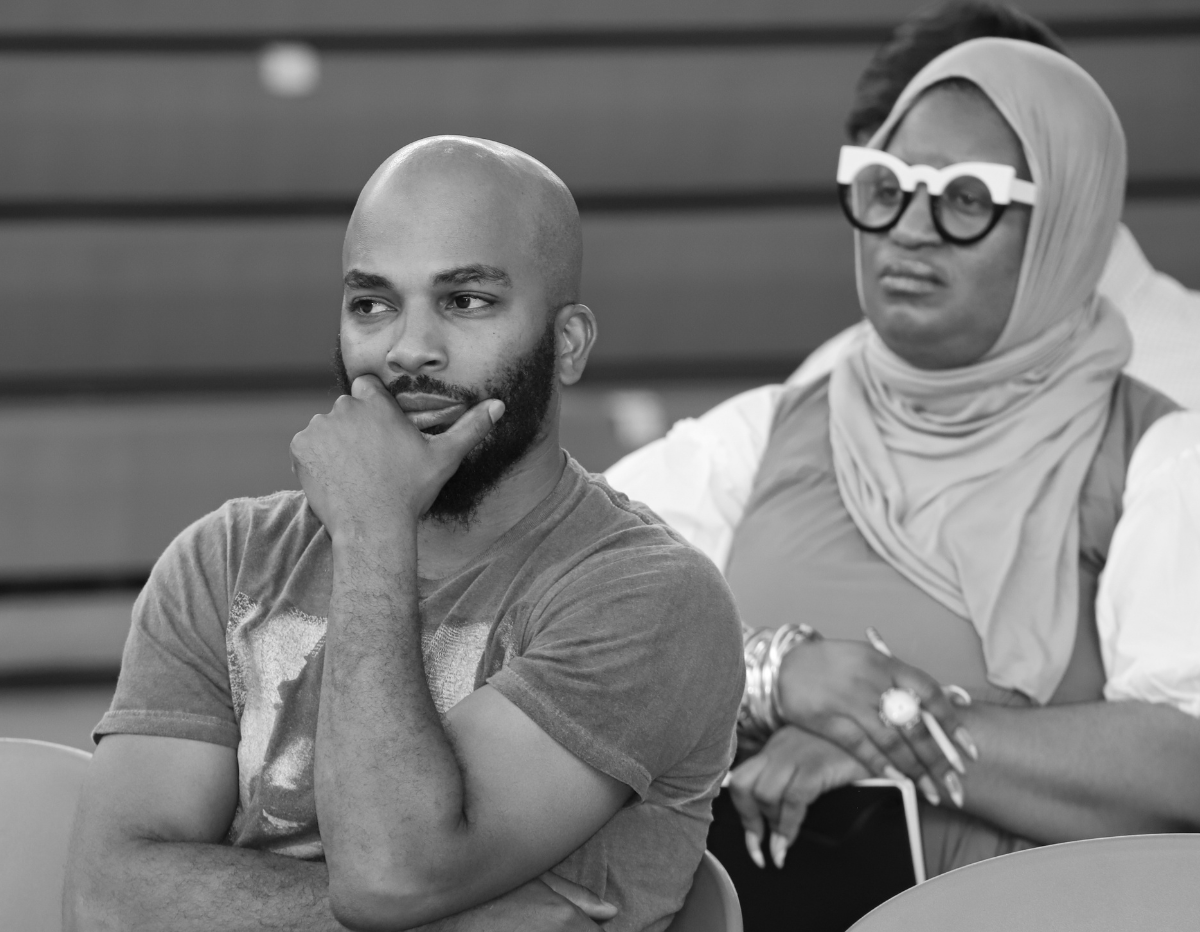
man and woman looking off camera

Reimagining Justice This Month: September

Reimagining Justice This Month highlights stories about effective responses to violence — responses that disrupt cycles of violence, heal trauma, and address structural racism.

Alternatives to Police and Prisons: Activists Share How to Better Address ViolenceTeen Vogue
Justice reimagined is not only possible, it’s already here. Youth leaders in communities around the country know that punitive systems only continue cycles of violence and trauma. They envision a world without police and prisons, and are building the new systems that create true safety and well-being. Listen to these stories, let them stir your imagination and inspire you, and recommit with us to nurturing and sustaining this powerful work.

NJ Finds $10M for Anti-Violence Services after OutcryNJ.com
Hospital-based Violence Intervention Programs (HVIPs) are vital parts of a community-centered public safety ecosystem that saves lives and breaks cycles of trauma and violence. When it looked like funding for HVIPs across New Jersey was about to dry up, a community-led coalition that EJUSA has been part of since its initiation responded with action. When we act together we succeed, and now essential funding for HVIPs is in place.

Learn more about Newark’s community-centered public safety ecosystem with a peak into the Newark Community Street Team’s work to keep students safe as they head back to school, and with a deeper dive into our report, The Future of Public Safety.

To Fight Gun Violence, Kids Need Places to PlayThe Appeal
Safety is not just the absence of violence. It’s the presence of well-being. It’s thriving neighborhoods, including places to play, that nourish a love for community that can become the root of a true public safety ecosystem. While the city of Philadelphia continues to pour resources into a police-centered response to violence that continues to prove ineffective and deadly, pools and other places for kids to play are being forced to close. Instead of closing some of the only safe places for children facing grief and trauma, we can invest in the community-centered solutions we know can break cycles of violence.

To Build Public Safety that Protects Black Women and Girls, Money Isn’t the Only Resource We NeedNonprofit Quarterly
The narrative that police and prisons are the solutions to violence has not only been driving billions of dollars away from the community-based initiatives that actually break cycles of violence. It is also built on the backs of Black people, including women and girls, whose experiences of both violence and powerful work are too often ignored. If we want a future in which the safety and wellbeing of Black women and girls matters, we need to both surface harmful narratives that dehumanize and erase Black women and girls, and build new narrative power.

In Case You Missed It: Read and Share What’s On the EJUSA Blog 

  • The Movement for Public Safety — check out Jaylah Cosby’s reflection on the community at the center of the evolution of the Future of Public Safety
  • Victory in NJ — share this short post on the recent victory driving funding to HVIPs in New Jersey!
Filed under: Uncategorized

Victory in NJ

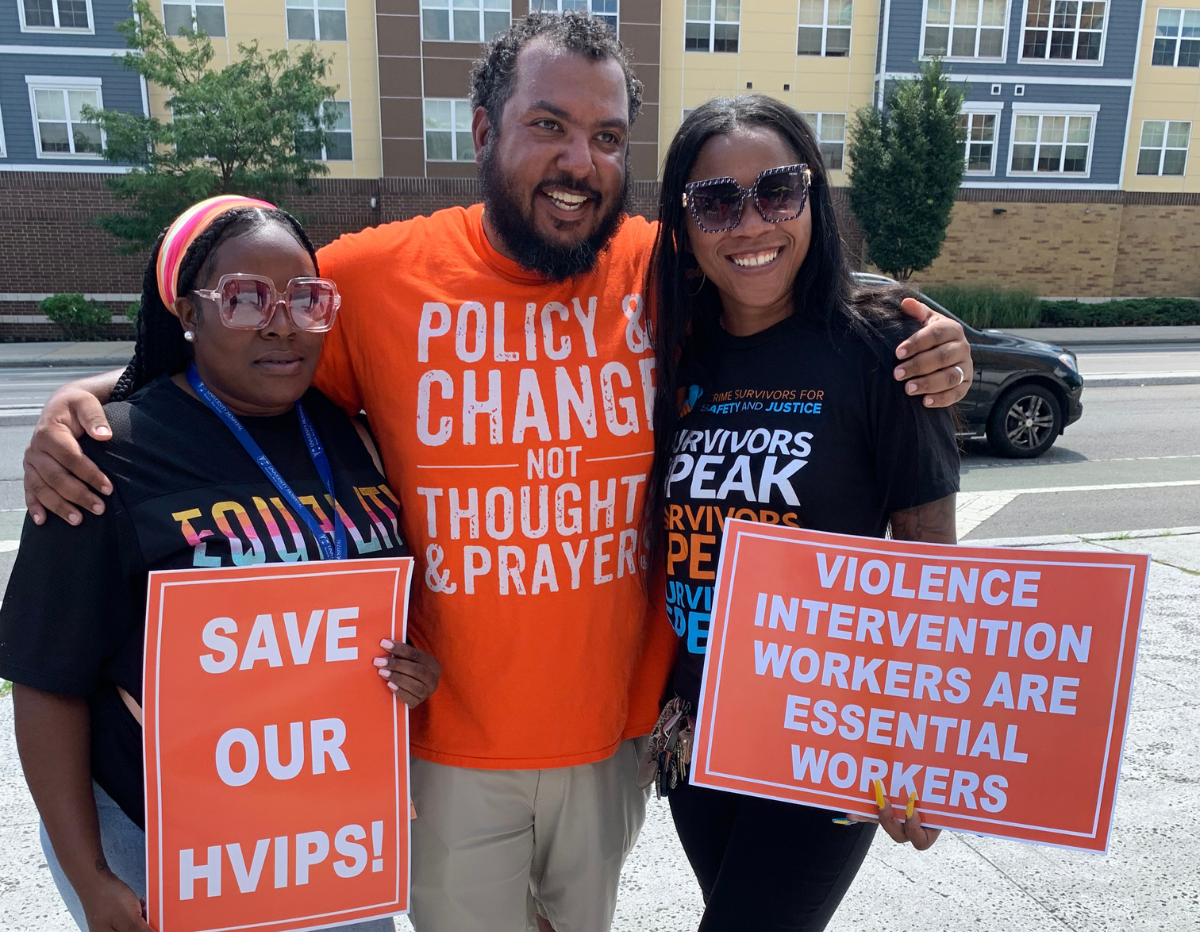
man posing for picture with two women holding signs

Community members across New Jersey spoke out about funding for violence intervention funding. And they were heard. 

Earlier in the year, the governor of New Jersey announced a gun safety plan. However, when the state attorney general released the department budget, funding for hospital-based solutions — solutions that work — was missing. After hearing about the lack of funds, EJUSA led a coalition of activists and organizations that pressured leaders to fix that omission. 

The result was $10 million in funds towards efforts that will save lives. Although the governor and attorney general provided the money, communities in New Jersey are responsible for this win.

Filed under: Uncategorized

The Movement for Public Safety

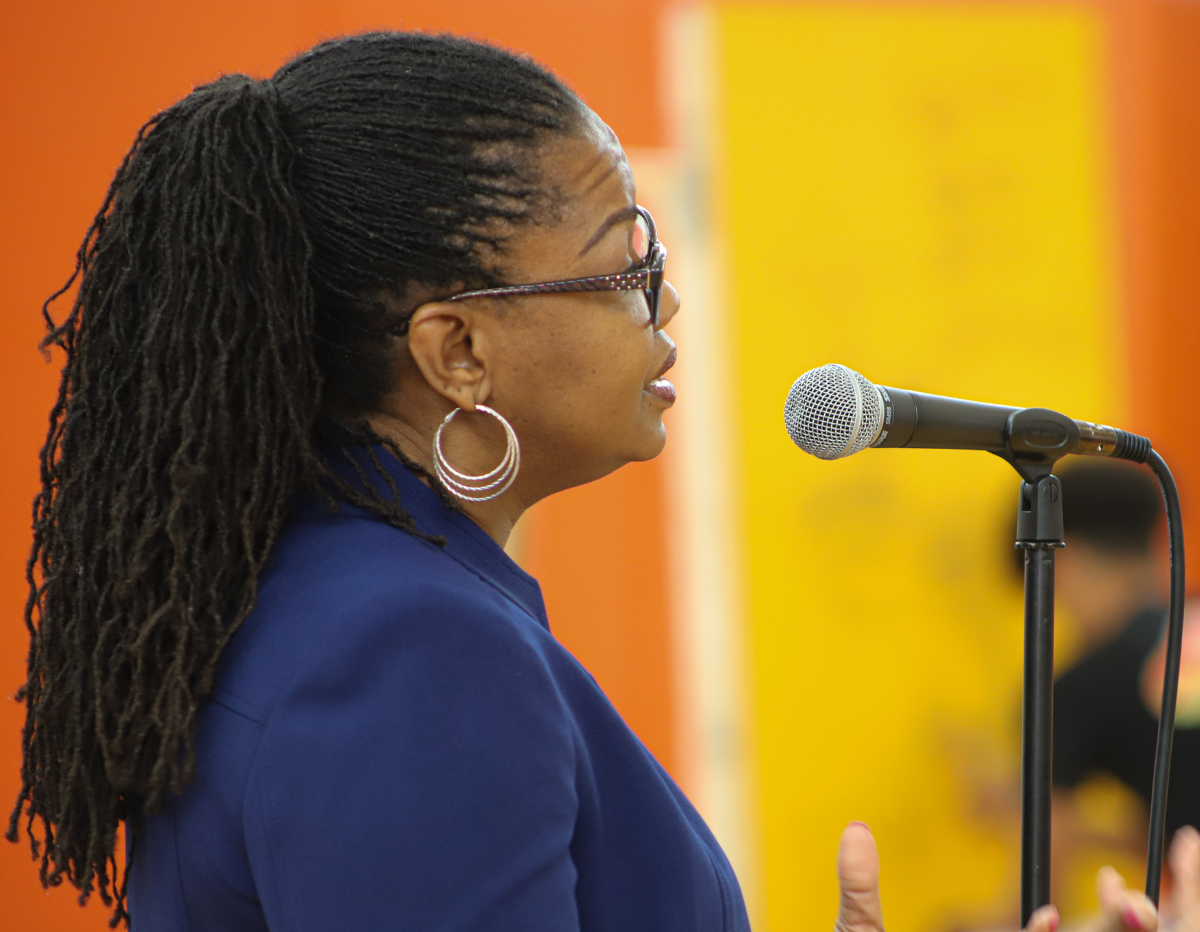
woman talking into microphone

Some time ago, we hatched an idea for a handful of videos, narrated by Newark residents, that would tell about the city’s strides on public safety. That idea culminated in late June with a 56-page report and a two-day convening that brought together dozens of Newarkers, including the mayor, and policy experts and funders of justice reform and transformation from across the country.

The initial driving force of the project was our belief that no one had told the full story of what was happening in Newark. Here was a city, once plagued by extreme violence, deep-seated poverty, and ailing social systems, that was reversing its outcomes on murders and shootings. And there was something special at the center.

Community. 

Grass roots organizations and long-time residents were pushing for change and building solutions that focused on the needs of neighborhoods. These ideas and solutions cut to the root causes of violence. 

They also fostered collaboration with the police, but with the insistence that law enforcement cannot be the sole point of contact for public safety. 

There is no question that Mayor Ras J. Baraka has cultivated a unique environment to build a public safety ecosystem. But we believe that they have built a model that can be replicated across the nation. 

But cities can replicate the model only if they know it exists. That’s why we determined this storytelling project was essential, and why we brought Newark’s community organizations and, ultimately, leaders nationwide together for an amazing convening. 

That is how a few social media videos evolved into The Future of Public Safety.

We limited attendance for health and logistical reasons, but we did record all of the externally focused sessions. Please take some time to watch our executive director, Jami Hodge, talk with our partners in producing this report: Mayor Ras J. Baraka and Aqeela Sherrills, chair of the Newark Community Street Team. They talk about why Newark’s public safety ecosystem is essential and how it can guide other cities across the country. 

The future of public safety is now. Get involved.


Panel II — Funding and Sustainability

Panel III — Where We Are Going

Filed under: Uncategorized

Newark: A Blueprint for Safety and Healing

vibrantly painted city mural

Reimagining Justice This Month: June

Reimagining Justice This Month highlights stories about effective responses to violence — responses that disrupt cycles of violence, heal trauma, and address structural racism.

Newark: A Blueprint for Safety and Healing, NewarkSafety.org

Newark, as moved through and lived in by its people, is a healing city. It is a city still hurting, still learning from the past, still working hard to figure out just what safety means. For decades, Newarkers have leveraged the power and possibility of their experience and connections to break cycles of trauma and violence. The roots of the public safety ecosystem that has grown in Newark are a deep love of community and a commitment to understanding safety not just as the absence of violence, but the presence of wellbeing, and of thriving neighborhoods. Take a walk through the report, listen to the stories of hard work and innovation to center community and equity in public safety, and sign up for updates. 

  • A deep love of community, collective community identity, and a spirit of innovation opened channels of communication that engaged a full community and set the social and cultural conditions for transformation (pg. 28-37)
  • Political leadership and vision, and responsiveness to community solutions created the political and institutional conditions for transformation (pg. 38-41)
  • Community-led strategies like high-risk street intervention, bridge building between community and police, healing-centered programs, and community-led coordination drive transformation (pg. 41-46)
  • Systems-led strategies like budgetary support, City-level coordination, and city and state grant programs strengthened the infrastructure for an ecosystem to grow and thrive. (pg. 46-48)

A Public Safety ‘Ecosystem’: Newark’s Success Story, The Crime Report

With community and police violence on the rise in cities across the country, and headlines about rising crime dominating the news, something different has been happening in Newark. The partnership between the community and the system in Newark offers a case study in what’s possible if we care about safety, wellbeing, and equity. As EJUSA’s Director of Violence Reduction Initiatives, Will Simpson reminds us, the community-centered public safety ecosystem that is growing in Newark is the work of generations. (Bonus: read more about EJUSA’s report in collaboration with the Newark Community Street Team and the City of Newark here). 

California spends $156 million for violence prevention, Just The News

At a time when communities are suffering and politicians are doubling down on policing and mass incarceration, we need transformational solutions more than ever. We know that the healers who are closest to violence are the ones who know those solutions best. This month, the California Violence Intervention and Prevention (CalVIP) program granted $156 million to organizations – including community-based violence intervention and healing groups – in 79 cities. This funding is a vital step toward justice reimagined, and with $53.4 million still available, we need to make sure community-based groups know about the opportunity to apply for these funds


In Case You Missed It: Read and Share What’s On the EJUSA Blog 

  • Where is the death penalty movement today? — listen to a conversation between Sarah Craft and Jennifer Pryor, Director of Organizing and Community Outreach for Ohioans to STop Exectutions about the evolution of the death penalty movement over the past 17 years.
  • Remembering a Victory for Justice — on the tenth anniversary of the repeal of the death penalty in Connecticut, Colleen Cunningham shares the story of murder victim family members changing the narrative and leading the way to victory.
  • Fearless Advocating — check out Jaylah Cosby’s profile of Pastor Gwendolyn Cook, who has dedicated her life to stopping sexual violence and breaking cycles of generational trauma


Filed under: Uncategorized

The Future of Public Safety is Now

EJUSA HomePage Photo

What is safety?

For centuries elected officials and lawmakers nationwide have grounded the notion of safety in police, prosecutions, and prisons. But are these truly the foundations of safety? 

When we explore the idea of safety more deeply, we understand that the traditional meaning — based on the absence of harm, danger, or injury — does not fully represent what safety means to a community and only perpetuates punitive approaches.  

That has to change. 

Black, Brown, marginalized, and poor communities live with the daily impact of this harmful interpretation of safety. For so long, law enforcement has translated that interpretation by disproportionally targeting these groups, all in the name of “public safety.” A deeper understanding recognizes the white supremacist roots that encourage a “safety” rooted in fear and punishment rather than healing and thriving.  

The Newark community has for years been building a movement to put the public back in public safety by embracing a broader understanding of safety. Long-time residents and grass roots activists have channeled the trauma, grief, and anger that decades of violence and police oppression produced, along with the love, hope, and resilience present within the community, into healing-centered solutions — and the passion to make them reality. 

On behalf of our partners — the Newark Community Street Team and Newark’s Office of Violence Prevention and Trauma Recovery — we are proud to publish a chronicle of that evolving movement: The Future of Public Safety: Exploring the Power & Possibility of Newark’s Reimagined Public Safety Ecosystem.

Newark activists during 24 hours of peace.
Credit: Newark Office of Violence Prevention and Trauma Recovery

The movement started as pure activism: community members tired of seeing their friends and family members killed or harmed. They demanded change. Some identified specific needs in the community and built solutions to the root causes of violence. The strategies started to complement each other and have a real impact. 

These strategies weren’t necessarily new. But they didn’t fit inside the dominant paradigm because they are rooted in the dignity of each person rather than the “good people” vs. “bad people” frame central to our punitive approaches.The leaders driving these alternative strategies are challenging that dominant paradigm. They are expanding the notion of safety beyond the absence of violence and danger to make the presence of well-being and the infrastructure to support it essential to public safety. 

The Future of Public Safety captures the stories of Newark’s people, the trauma that inspired them to seek change and the hope and commitment that turned ideas into a working ecosystem of solutions. 

We release this report now to lift up the work that has been happening for generations in Newark because other cities can learn from Newark’s journey and replicate the successes. The need is urgent. The future of public safety is now.

Jamila Hodge, Executive Director
Will Simpson, Director of Violence Reduction Initiatives

Filed under: Uncategorized

Fearless Advocating

Paster Cook with one of the youth she's helped

Pastor Gwendolyn Cook was a preacher before she became a fierce advocate for young women swept into sex trafficking. As a preacher she had the unique position of supporting her congregants in their lowest moments, including while they are in prison. The individuals that stood out to Pastor Cook the most were young girls.

Pastor Cook serves the Camden, NJ, and she is the newest member of EJUSA’s Trauma & Healing Network. She serves a special role on the network because she has many years of experience helping youth. Her gift for accessing the needs of young people made her uniquely positioned for helping young girls.

Most of the youth she served were survivors of sexual assault and sex trafficking. After visiting almost 50 girls over a number of visits in a female juvenile prison, she says, “I couldn’t believe there were so manly little girls in that situation.” On the ride home, she couldn’t stop crying from the weight of all the girls she had just seen. Even through her tears, Pastor Cook thought, “How can I help them?”

She started mentoring girls in a local juvenile facility in 2009. Her advocacy then began to expand when she realized that children all over New Jersey needed help.

Pastor Cook recognized the risk from increased gang activity, drug distribution, and overall crime and knew that she needed to pray for the youth and find a way to support them. The need became even more apparent when the violence reached her own family. Her niece was swept up into sex trafficking.

Pastor Cook’s solution was to create an organization that acted as a crisis unit. Women Walking in the Spirit (WWITS) Girls Mentoring Program isn’t a 9 to 5 organization,” Pastor Cook said. “Crime doesn’t happen that way.” And she’s right — especially in Camden, a city well-known for its poverty and struggles with violence. The city’s need for trauma-informed care is essential.

WWITS gets refers from courts, police, and schools, and community members for girls that might be at risk of being involved in the justice system.

The organization’s goal is to try and connect with the girls before they become victims. One of the ways Pastor Cook does is by “mentoring the whole family.” Sexual violence can be a generational trauma, and in order to help the girls, the whole family has to receive support.

Her relationship with EJUSA first started when we worked together to frame a narrative for WWITS’s work and build a program model so they could gain new funding sources.

In the future, Pastor Cook wants to build an art institution. She believes kids are put into environments, like the gray blank walks of public-school classrooms, that subconsciously prepare them to be in prison. Instead, kids should be in an environment that urges them to be creative and free.

She first collaborated with EJUSA to help build the framework for her organization and find resources for funding. And so far she’s benefited from learning about applying for grants and working with Crime Survivors for Safety and Justice. Working with EJUSA has expanded beyond anything she could have possibly thought she could do for the children of her community.

Filed under: Uncategorized