Category: Ready for launch

36 hours in Orlando

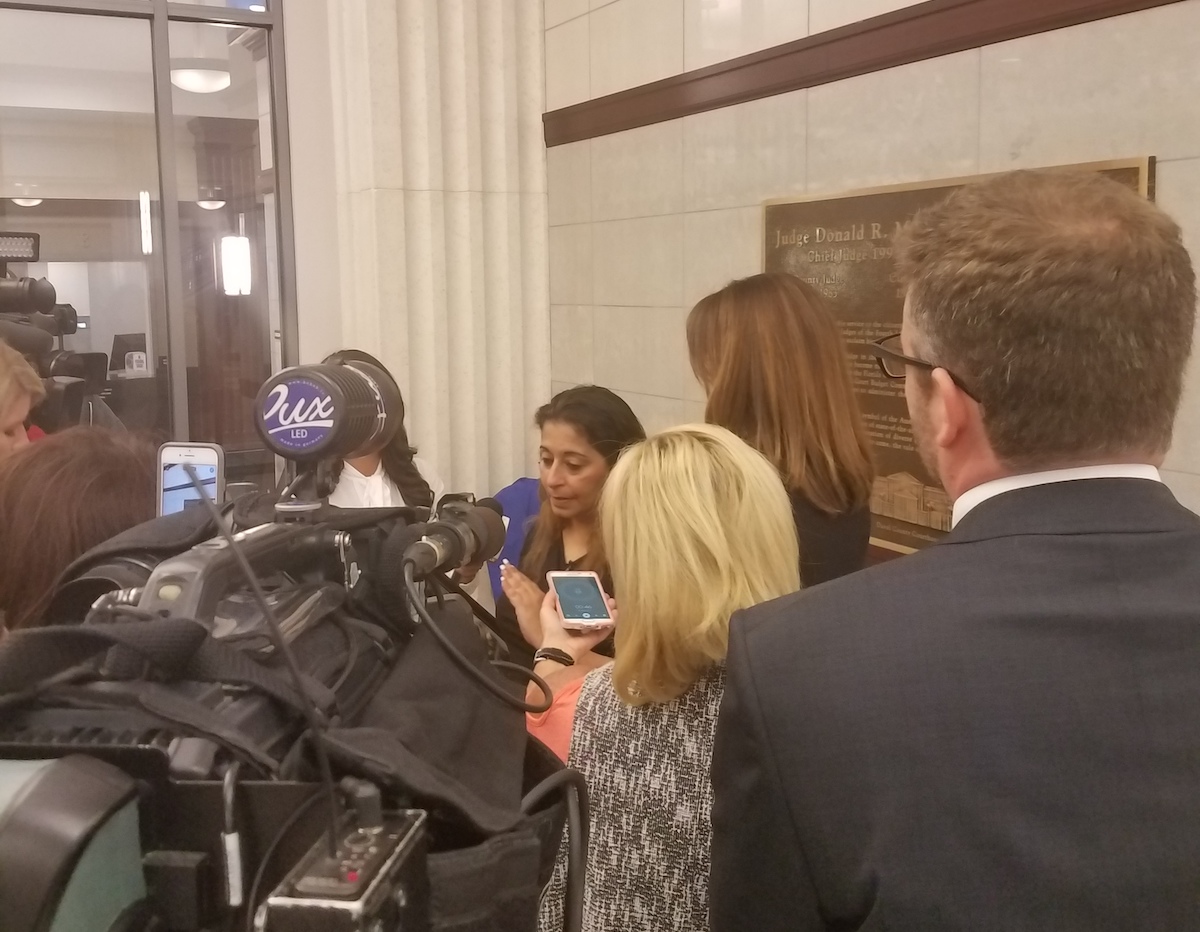
Yesterday, Florida State Attorney Aramis Ayala announced that she will not be seeking the death penalty in any cases while she remains in office.

Ayala’s office covers Orange County, which has historically been an outlier in Florida and in the country with regards to its death penalty usage. It is among just four of Florida’s 67 counties that have produced more than five executions since 1976.

Check out our storify to see how the story has unfolded in the last 36 hours.

Continue reading

Filed under: Ready for launch

Resolution, at last, for victim’s family in Florida

Darlene after plea announcement

“It’s time for healing.”

That’s what Darlene Farah said when she walked out of the courtroom this morning, more than 3 1/2 years after her daughter, Shelby, was murdered.

James Rhodes pleaded guilty to killing Shelby after reaching an agreement with the new State’s Attorney, Melissa Nelson, that would take the death penalty off the table and forgo a trial. Nelson’s predecessor, Angela Corey, had refused to consider such an agreement with Rhodes and his attorneys. Corey even vilified Darlene for her desire to have the charges end in a plea deal.

EJUSA’s Christine Henderson met Darlene shortly after she started working against the death penalty in Florida in early 2016. Since then she has stood with her at press conferencestalked on panels with her, and, like today, sat with her in courtrooms.

“The death penalty can cause such harm to the surviving families, with decades of uncertainty and empty promises, Christine said. “I’m just glad this nightmare is over for Darlene and her kids, and they can continue the long, hard process of healing without the burden of being in the courtroom and having the details of the case brought up over and over again.”


Filed under: Ready for launch

Lawmakers across the country re-evaluating the death penalty

Marc at the MT CCATDP press conference

State capitals are buzzing as lawmakers return for this year’s state legislative sessions. It’s no surprise that the death penalty is on the agenda in so many places, given the growing movement away from executions.

There has long been strong support for death penalty repeal in Kansas, but due to many circumstances, repeal bills haven’t received committee hearings in recent years. This year, a diverse range of Kansans – murder victims’ family members, faith leaders, those with law enforcement experience, and legal experts – were able to express their support for repeal in front of a House committee. The hearing room was standing room only with supporters of the bill, and those testifying in favor of repeal outnumbered opponents 9 to 1.

In Washington State, death penalty repeal legislation was introduced by a powerful coalition of bipartisan lawmakers as well as the Democratic Attorney General, his Republican predecessor, and the Governor.

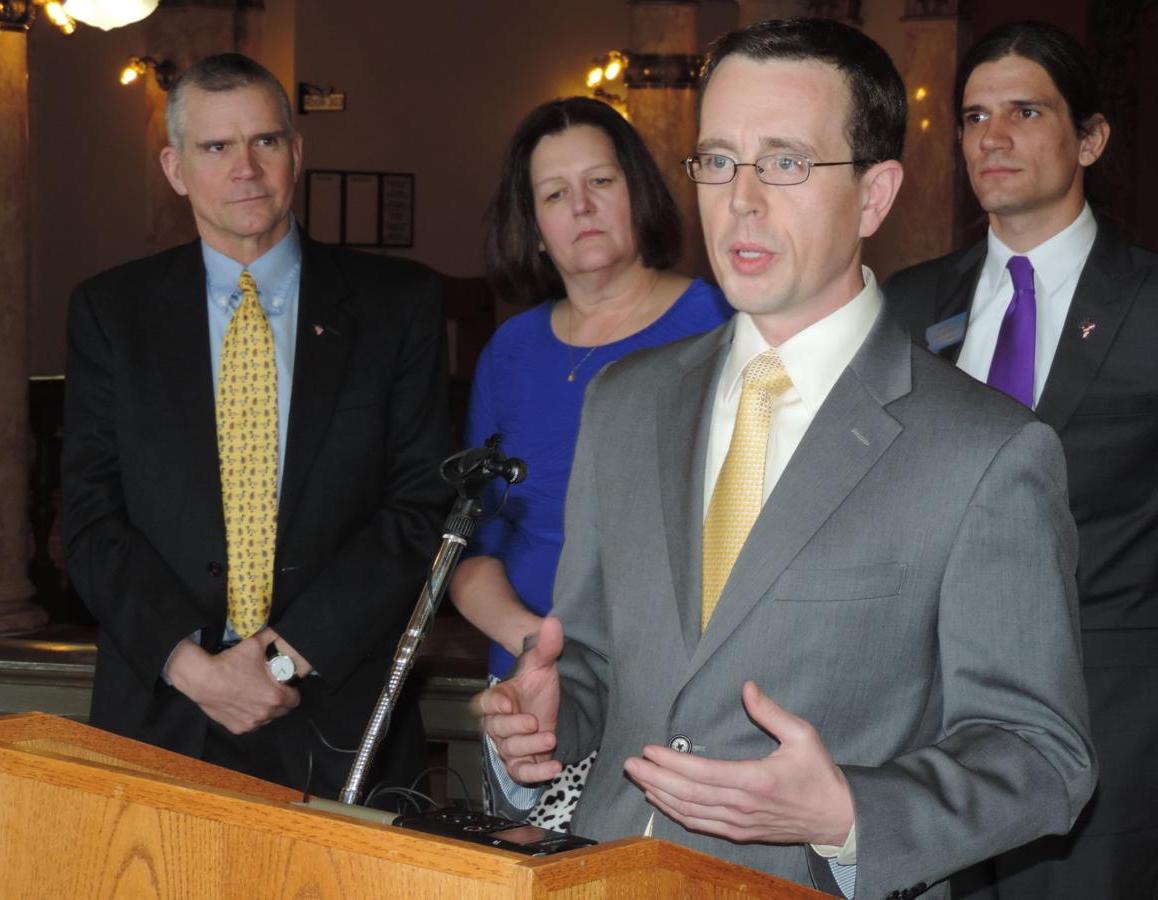
Lawmakers in Montana pushed again for repeal this year, and EJUSA’s Marc Hyden testified at a committee hearing about Conservatives Concerned About The Death Penalty and the growing national movement of conservative support for repeal. Local conservatives also held a press conference to show their support for the measure. While the bill did not pass this session, neither did a bill to fix Montana’s execution protocol (in fact, no such bill was even introduced), so there is no means to carry out an execution in the state until 2019 at the earliest.

In addition to repeal bills, lawmakers in 5 states (Indiana, South Dakota, Ohio, Tennessee, Virginia) are considering bills to exempt those with severe mental illness from the death penalty. Alabama and Florida are both struggling to bring their death penalty statutes into conformity with the Constitution, after the Supreme Court ruled that juries, not judges, must decide death sentences. And lawmakers in Connecticut, New Mexico, and Maryland are poised to defeat efforts to reinstate their death penalty laws.

Filed under: Ready for launch

Together, Newark police and community use understanding of trauma to call for system change

Newark Community Talk Back

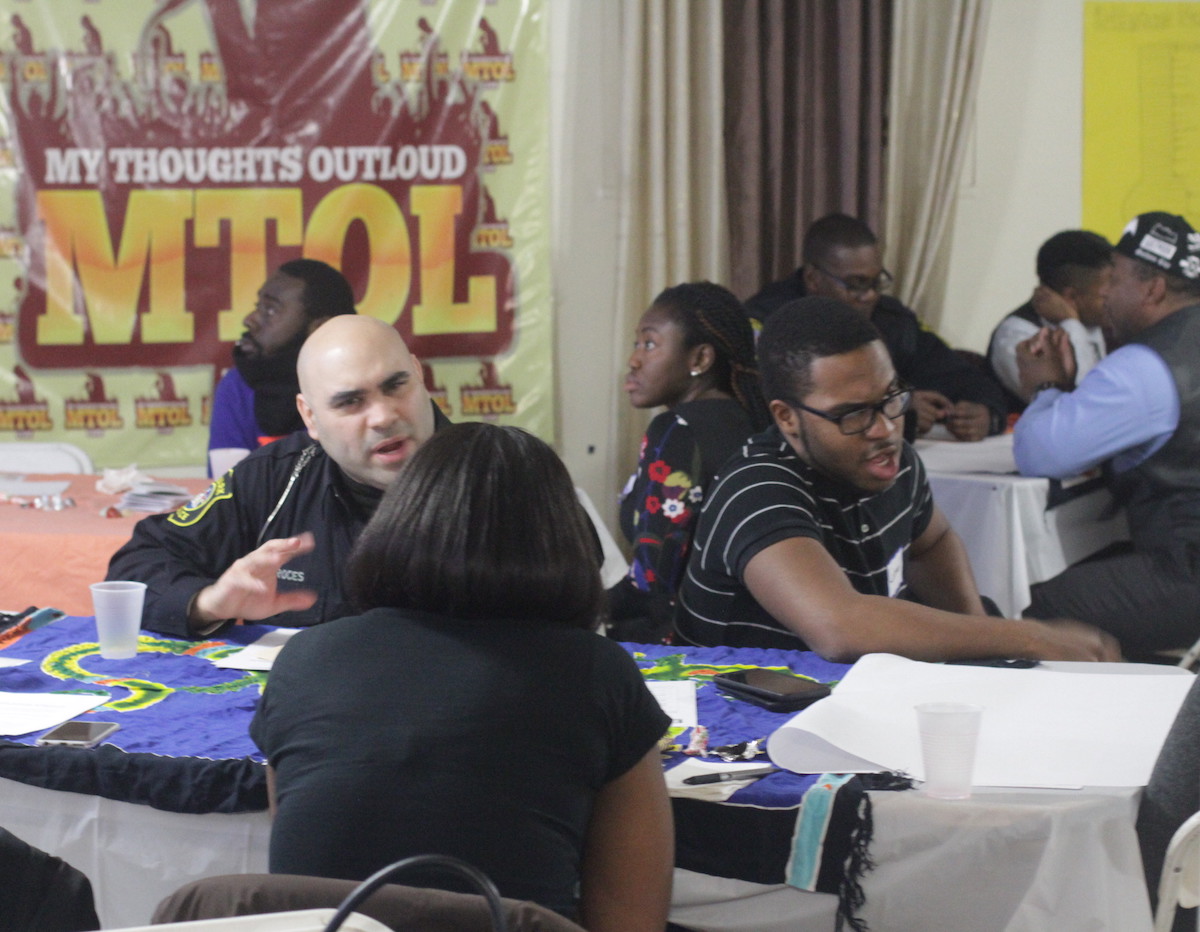
Since last spring, more than 150 police officers, residents, survivors of violence, justice-involved citizens, social workers, and faith leaders came together last fall to participate in EJUSA’s inaugural Police/Community Initiative on Trauma-Informed Responses to Violence  in Newark, New Jersey. Through the initiative, participants learn about structural racism, trauma-informed practices, and work together to generate recommendations calling upon the police leaders and city/state government to make changes that will improve police/community relations and reduce violence and trauma.

In January, EJUSA worked with local leaders to organize a community “Talk Back” to share the power and impact of the trauma trainings and present the top eight recommendations created jointly by police and the community. At the Talk Back, law enforcement and the community declared their support for recommendations and interest in advocating for system change together. These recommendations ranged from a statement of the police department’s historical involvement in the oppression of communities of color to creating a more robust trauma response system that puts the needs of crime survivors at the center of our responses to violence. A full list of recommendations will be made available in EJUSA’s upcoming report on Trauma-Informed Policing.

Talk Back participants were enthusiastic about moving forward with further trainings and working together to implement the recommendations. Lionel Latouche, a Newark trauma therapist whose cousin was recently killed by police in New York shared: “These trainings with EJUSA gave me a deeper level of compassion for police officers. I believe there is power in us coming together to share our experiences – plus we have identified concrete ways to move forward together.”

Law enforcement’s understanding of community trauma has increased significantly. Louis Forst, a Lieutenant with the Newark Police Department and a participant in the trainings said: “I see a real difference in my officers who have completed the EJUSA trauma training with civilians. In my officers, I see a desire to recognize the trauma in the community and to use that understanding to work together to reduce violence and help the victims. They really believe 
now that as a city we can get away from the ‘US vs THEM’ mentality.”

This year, EJUSA will expand its trauma trainings by working more closely with faith leaders and schools to train an additional 150 participants in 6 upcoming trainings in Newark. We will also continue to work with the community on the implementation of their priority recommendations for system change.

Filed under: Ready for launch

Engaging event at Florida’s largest Evangelical congregation

Christine at the podium at Northland Church

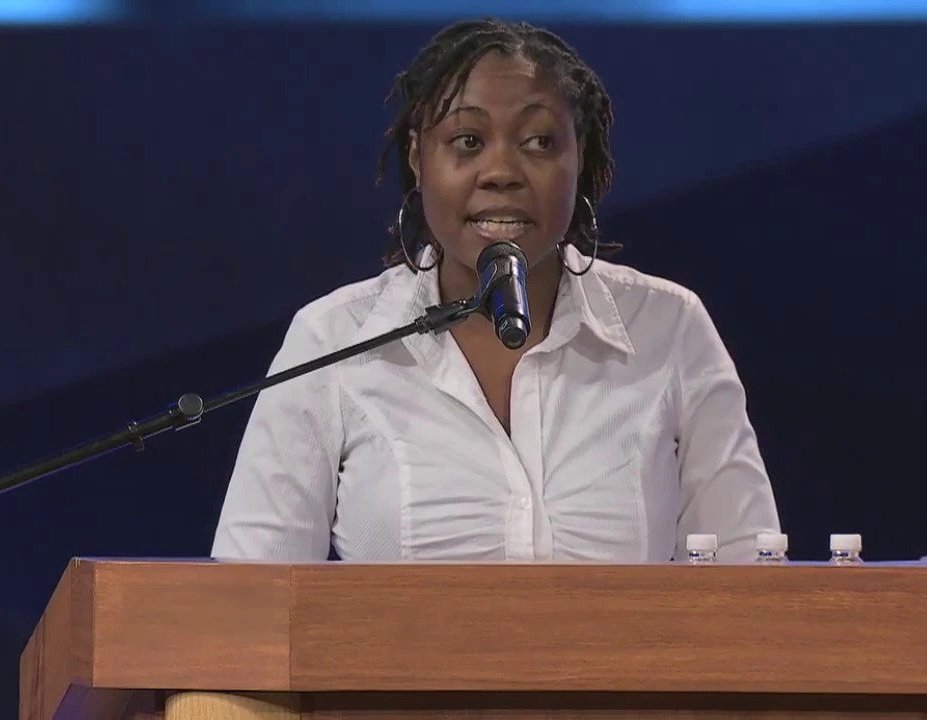
This past Wednesday, EJUSA co-sponsored a discussion on the death penalty at Northland Church in Longwood, Florida. We were thrilled to be able to help bring this conversation to Northland – one of the largest Evangelical churches in the nation. Pastor Joel Hunter moderated, and EJUSA Organizer Christine Henderson made the trip from Jacksonville, FL, to share our vision of a criminal justice system that heals and restores lives. The panel consisted of two people who have come face to face with the death penalty in their personal lives and two people who discussed the theological implications of the death penalty.

You can watch the entire discussion here:

The audience was captivated by Herman Lindsey who spoke of his time on Florida’s death row. Herman was eventually exonerated and the Supreme Court of Florida acknowledged that he should never have been convicted in the first place.

Darlene Farah shared her heartbreaking story of the loss of her daughter. She continues to fight against the death penalty for the man who killed Shelby, and she so eloquently spoke of the ways that the death penalty harms victim’s family members instead of helping them.

Pastor Hunter shared with the audience that it was quite difficult to find a panelist who would bring the pro death penalty side. John Stemberger agreed to do so. He is a local attorney who made the case that the death penalty is justified biblically. Even still, he acknowledged that our capital punishment system is incredibly broken, and that we need to work to fix it.

Lastly, Shane Claiborne passionately spoke about his faith that compels him to work to end the death penalty. He shared about his recently released book entitled Executing Grace – How the Death Penalty Killed Jesus and Why It’s Killing Us. He shared many stories including that of Billy Neal Moore who was sentenced to death in Georgia. Through an intense turn of events, the victim’s family members advocated for Billy to be released after his death sentence was overturned, and he is now a Pastor in Georgia. Shane’s theme: No one is beyond redemption.

The event reached some 2,000 people including those in person and online. EJUSA looks forward to more opportunities to engage in the dialogue about the death penalty. We know that hearts and minds are changed at events like this one, and we remain hopeful that the end of the death penalty in America is near.

Filed under: Ready for launch

Georgia Conservatives Concerned about the Death Penalty

Last year, Georgia led the nation in executions with nine, which was the most in the Peach State’s history. While executions are at record levels, no one has been sentenced to die in Georgia in nearly three years, which suggests that its death penalty is slowly dying. However, there are many in Georgia who wish to hasten its demise. Just last week, a group of conservatives and libertarians came together to launch the Georgia Conservatives Concerned about the Death Penalty (GA CCATDP) group and call on the state legislature to reexamine capital punishment. The press event was attended by a conservative state representative, former Republican Party official, think tank leader, and activists from across the state who described in detail why capital punishment is inconsistent with their values.

Republican State Representative and press conference participant, Brett Harrell, said, “I like to make sure that government is as efficient, effective, and small as possible,” but when speaking about the death penalty, “the government has failed to provide an efficient, effective, accurate system.”

If you missed the press conference, you can watch it here.

Further south in Florida, the death penalty continues cause problems and disruption in the legal process. After having its capital sentencing scheme ruled unconstitutional multiple times, Florida’s death penalty is in limbo. Until the legislature attempts to address the constitutional issues, Florida prosecutors are unable to pursue death cases. Moreover, it appears that all Florida death row inmates who were sentenced to die as a result of a non-unanimous jury decision since 2002 will require a new sentencing trial. This is required because they were unconstitutionally condemned, but the spate of new trials will ensure that the already costly process will become even more expensive.

Conservatives Concerned in the media

Upcoming

CCATDP will be returning to the Conservative Political Action Conference (CPAC) for the 5th year in a row early next year, and conservatives from across the nation will join CCATDP at the conference. The event will be in National Harbor, Maryland, from February 22-25 in 2017. If you’re in the area, we hope you’ll drop by and say hello!

Get involved

Let your family and friends know that Georgia conservatives are turning against capital punishment by sharing this article about the Georgia Conservatives Concerned about the Death Penalty on Facebook!


Conservatives Concerned About the Death Penalty (CCATDP), a project of Equal Justice USA, is a network of political and social conservatives who question the alignment of capital punishment with conservative principles and values. For news and updates from CCATDP, join their email list.
Filed under: Ready for launch

Georgia conservatives launch new efforts to re-examine death penalty

Georgia Conservatives Concerned About the Death Penalty, a network of conservatives questioning the alignment of capital punishment with their conservative principles, officially launched last week with a news conference at the Georgia State Capitol.

“Georgia may have led the nation in executions in 2016, but our state is actually moving away from the death penalty,” said Marc Hyden, EJUSA’s National Coordinator for Conservatives Concerned About the Death Penalty and a longtime Georgia resident. “Georgia conservatives stand for life, fiscal responsibility, and limited government, but the death penalty violates these core conservative tenets.”

Marc was joined on stage by a current state legislator, a former congressional district chairperson for the GOP, the COO and Chairperson of two local conservative think tanks, the former president of a local pro-life organizations, and the past chair of a local college Republicans group.

You can watch the full press conference here:

News outlets in Georgia and all around the country have picked up on the story, enticed by the fact that Georgia led the U.S. in executions in 2016, and now a group of conservatives is calling the death penalty a failed, wasteful, big government program. Here’s just some of the coverage:

Even the L.A. Times picked up the story in its latest editorial about the death penalty, and Conservatives Concerned National Coordinator Marc Hyden had an op-ed published in the Newnan Times-Herald, “The death penalty is Georgia’s past, not its future.”

Filed under: Ready for launch

Death penalty forum at Northland Church

A Discussion on Capital Punishment with Shane Claiborne; Northland Church - Longwood, FL; Wed. Jan 25, 2019 - 7pm

EJUSA is proud to be sponsoring and organizing a exciting event at Northland Church, Florida’s largest evangelical congregation. Northland Pastor, Dr. Joel Hunter, will moderate a discussion about the death penalty with author and activist Shane Claiborne, Florida death row exoneree Herman Lindsay, and Darlene Farah, whose daughter, Shelby, was murdered.

Please join us for this important discussion! RSVP here.

A Discussion on Capital Punishment with Shane Claiborne; Northland Church - Longwood, FL; Wed. Jan 25, 2019 - 7pm

Filed under: Ready for launch

New State’s Attorney in Florida wants to start CIU

Florida prosecutors have played a major role in creating an unjust criminal justice system with their ability to decide who to prosecute and what charges to file.

Several prosecutors in the state had a history of extreme overzealousness and seemed to forget the community they were elected to represent. They charged children as young as twelve as adults, sentencing them to long prison terms. They helped fill Florida’s death row with people with severe mental impairments and mental illness. And they supported a system that has allowed people of color to be treated more harshly than white people.

Newly-elected prosecutor Melissa Nelson seems to have a different plan coming into office. Nelson represents the 5th district, which includes 5 counties in the Northeast area of the state. According to a recent interview with Reason magazine, she is looking at new ways of encouraging prosecutors to seek justice, rather than just convictions. And she’s even exploring the idea of creating a Conviction Integrity Unit.

Read the full interview in Reason here.

Filed under: Ready for launch

Updated VOCA Toolkit now available

EJUSA has released its updated “Apply for VOCA Funding: A Toolkit for Organizations Working with Crime Survivors in Communities of Color and Other Underserved Communities.” This revised toolkit reflects the new guidelines released by the federal Office of Victims of Crime (OVC). Many of new guidelines recognize the marginalization of underserved survivors and are a step in the right direction in terms of meeting EJUSA’s goals of brining equity to services for survivors.

Download the updated toolkit here.

Our toolkit breaks down the general rules and how to apply, tips on budgeting, making your case for VOCA funds, sample materials, a worksheet to help you get started, and also discusses some of the changes including:

  • Services to incarcerated survivors
  • Support for transitional housing and relocation expenses
  • LGBTQ populations are included in definitions under domestic and intimate partner violence
  • Funding for project evaluation
  • Using VOCA funds for web sites, social media, mobile devices, and more.
  • Expanded definition of restorative justice

VOCA funds represent a unique opportunity for groups that have been supporting survivors in their communities, but who do not yet have the funding to fully deliver critical services. Review the toolkit and get a sense if your organization may be eligible.

If you need assistance with technical questions regarding how your organization may be eligible for VOCA funds, contact our Grassroots Capacity Building Specialist, Latrina Kelly-James at latrinakj@ejusa.org.

You can read the full revised VOCA Rules and Regulations on the Federal Register.

What is VOCA?

VOCA is the federal Victims of Crime Act funding, a funding source allocated to the states and U.S. territories for direct victim assistance services, crime victim compensation, crime victim programs, and services for victims of federal crimes. States distribute funds to community-based organizations in their respective states that provide victim services and programs in their communities. Check with your state for full guidelines and processes for applying for VOCA funding.

Filed under: Ready for launch