
Category: Ready for launch

Black child, white child: Talking to our children about race

Latrina's daughters, Amara & Brooklyn

A reflection for Mother’s Day

As workers in the fight for racial justice and equity, our experiences and the issues we address as staff at EJUSA indelibly reflect within our daily lives. As team members, we talk explicitly about the challenges of race within criminal justice, social and economic equity, and the gamut of issues our nation faces and their impact on traction in our work. Our passion, planning and movement-building happens with analysis and clarity on the end goals.

For those of us with children, we go home to the realities of what race means in our lives and the inevitability of having to discuss race and answer the questions our children may ask in the midst of the chaos and injustice.

After talking with my colleague, Sarah, about how we talk with our children about race, the stark differences were amplified between the way she, a white parent, and I, a black parent, talk to our children. Sarah really wanted to get help with an issue she’d been struggling with: “How do I teach my son to call 911 when there’s an emergency but at the same time tell him not to talk to police? And how can I inject lessons about race when he’s just 4 years old?” She shared how he’d learned in school about police being your friend and how to talk with police. Her challenge of juxtaposing that with the realities of police violence is something she couldn’t reconcile. When does she expose him to racial injustice, to 12-year old black boys getting murdered by police for playing with toy guns?

Those questions are a luxury not afforded to me. It felt foreign to think about strategies of having “the conversation,” like Sarah was. For me, it’s not like preparing for the “birds and bees” talk. As a mother of two black daughters, the wife of a black man, there is no decision about whether to expose them to issues of race. There is not a moment when race doesn’t intersect our lives as we watch news briefs or grapple over the dinner table about the ways we are perceived. As a transplant to the South where racism is wallpaper, race drives why I advocate for equity in my oldest daughter’s education – there is a question as to why, at seven years old, she is so advanced. That coded language leaves no room for anything but my voice and teaching my daughter to craft hers.

I am the child of parents who didn’t sugarcoat racism and its effect on my family or black people. My family is not exempt from the harm of a criminal justice system whose effects still ripple in our lives. We recognize the pain of racism in employment and housing and the “surprise” that I was raised in and am raising my children in a two-parent home. I cannot hide our daughters from this, or from the murders of Trayvon Martin, Rekia Boyd, Akai Gurley, Sandra Bland, or from the fact that black people are more criminalized than any other race. Our truth lies in our daughters hearing us say that if Tamir Rice were a 12-year old white boy, he would have been asked to put down the gun, talked to, and possibly driven home to his family. He would have lived to see another day. Straight talk may not be the practice of other black families. For us, it is a fabric of our life.

There is a level of respect I have for Sarah and others who are making the effort to find ways to share lessons with their children, or nieces and nephews, which give some context for the chaos that is American racism. I appreciate that it is hard for white parents who recognize racial injustices to tell their children to respect police, that their role is to protect and serve.

As a mother of black children, as a black woman, telling my children to respect police won’t change the high possibility of an attack on them. I’m not convinced that the police will help me or mine. I worry daily about my daughters’ fears, emotions, and the stress that racism weighs and will weigh upon their lives as I try to prepare and protect them from something for which I have no control.

That is hard to hold. 

But these conversations between Sarah and me that expose our differences must be had in order to gain understanding and reconciliation – no matter how uncomfortable or foreign they seem, from either lens.

A question for me remains: What does her luxury feel like?
Filed under: Ready for launch

Libertarian and pro-life conferences highlight death penalty repeal

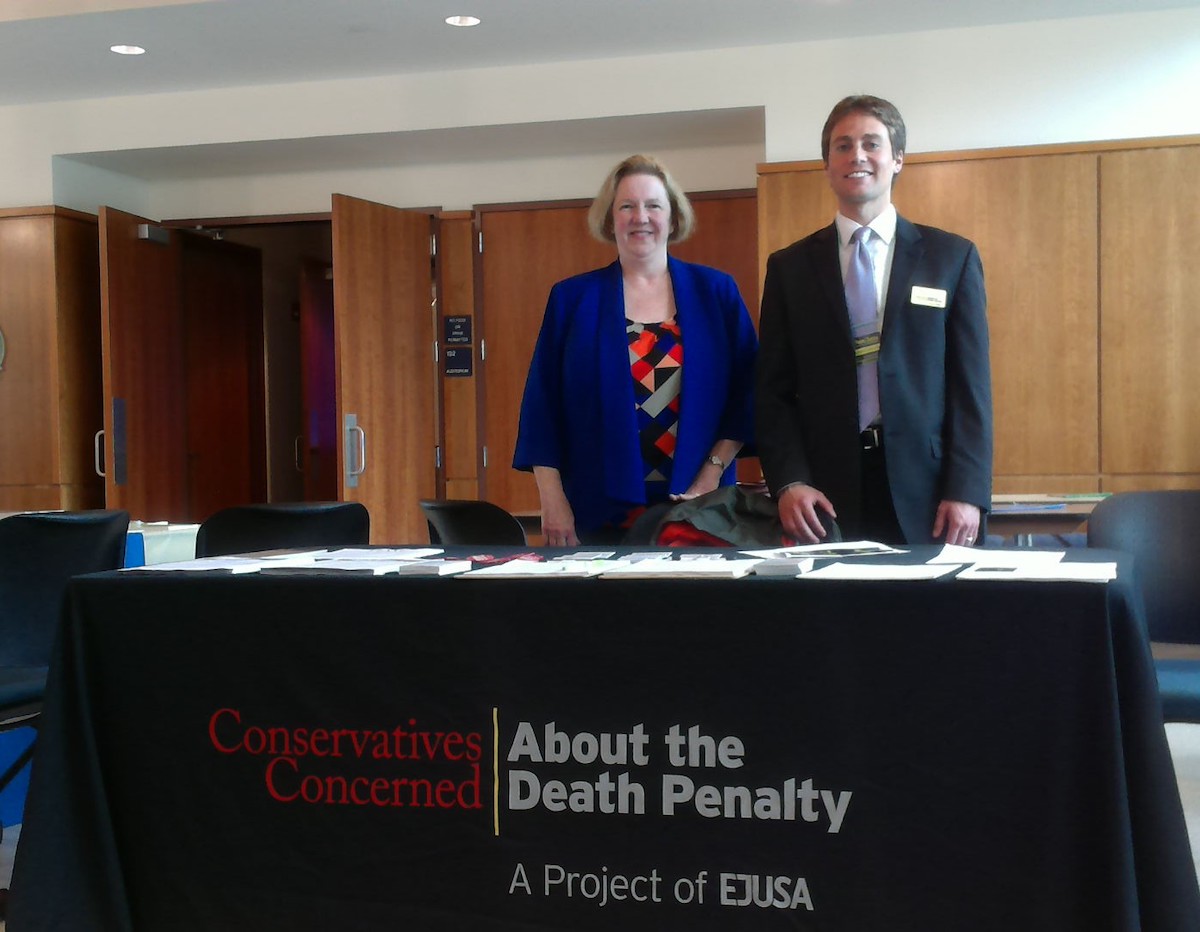
Kathleen & Ben at the CCATDP Table

Conservatives Concerned about the Death Penalty (CCATDP), a project of EJUSA, crisscrossed the country in April. CCATDP’s National Coordinator Marc Hyden made trips to Tennessee and Utah, while I traveled to Orlando for the Young Americans for Liberty (YAL) Florida State Convention and then to Philadelphia for the Life/Peace/Justice Conference. Our participation in these conferences reflects the interest in CCATDP across a variety of different constituencies, including libertarian and pro-life groups.

YAL is one of the fastest-growing student groups in the U.S., with over 700 chapters. It has established itself as the premier libertarian organization on college campuses. CCATDP joined YAL as a strategic partner in 2013 and is privileged to have YAL’s founder Jeff Frazee as one of our supporters. Partnering with YAL has proven extremely valuable for CCATDP’s outreach efforts, and this year’s Florida YAL Convention was no exception. As CCATDP increases our work in Florida – one of last remaining bastions for the active use of death penalty in the U.S. – the Florida YAL Convention provided an opportunity to discuss the problems plaguing the state’s death penalty with students eager to learn more on the subject.

The Life/Peace/Justice Conference, sponsored by Life Matters Journal, is a gathering focused on a view embraced by the Catholic Church and other groups known as a consistent life ethic. This perspective calls for life to be protected at all stages and to end practices that unnecessarily threaten it, such as the death penalty. CCATDP exhibited, and I led two workshops at the conference: the first on the conservative case for ending the death penalty and the second on the current state of efforts nationwide against the death penalty. At each workshop, there were many questions and interest from attendees in getting involved in work against the death penalty in their states.

Leaders of the local anti-death penalty group joined me to speak with attendees about their work in Florida and Pennsylvania. Mark Elliot, the Executive Director of Floridians for Alternatives for the Death Penalty, and Kathleen Lucas (pictured, with me), the Executive Director of Pennsylvanians for Alternatives for the Death Penalty, provided tremendous help tabling and were able to directly connect with potential volunteers in their states.


Filed under: Ready for launch

Case of racial bias on appeal to Supreme Court

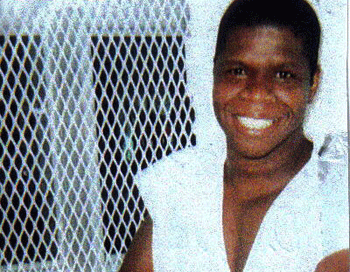
Duane Buck

Duane Buck was sentenced to death in Texas after his own lawyer called an “expert” who testified that Buck was more likely to be dangerous in the future because he is black. At this crucial moment, when our nation is addressing racial bias in the criminal justice system, the U.S. Supreme Court is expected to decide whether to hear the full case in the next few weeks. The Court should do everything in its power to ensure Buck receives a full and fair review of his case and, ultimately, a new sentencing hearing, free of racial bias.

In 1997, when Buck went on trial for capital murder of his ex-girlfriend, Debra Gardner, and her friend, Kenneth Butler, racial disparity was commonplace in the justice system – especially in Houston, Texas. One study found that the Harris County DA’s office, which covers the city of Houston, sought the death penalty disproportionately against people of color in that time period. For Buck, it wasn’t merely systemic bias that tainted his case, but also his own lawyer’s actions.

In order to be sentenced to death in Texas, a jury must decide that a person is likely to be a “future danger” to society. Buck’s own lawyer called an “expert” witness who testified that Buck was more likely to be dangerous in the future because he is black. The prosecutor reiterated this inaccurate and offensive racial claim. By the time the jury began their deliberations, they had heard it four times without any objection from Buck’s lawyer, and they sentenced Buck to death.

In addition to this pivotal failure of Buck’s original lawyer, his lawyer on appeal also failed to challenge the original lawyer’s conduct.

In 2011, two U.S. Supreme Court justices agreed that Buck’s sentence required legal review because “our criminal justice system should not tolerate” a death sentence “marred by racial overtones.” In the end, the Court’s majority refused to rule on the case. A more recent decision by the U.S. Supreme Court, however, has allowed Buck to appeal to the high court again.

“It is incomprehensible that a lawyer defending an African-American man facing the death penalty would knowingly introduce ‘expert’ testimony linking race to dangerousness,” said Christina Swarns, Director of Litigation at the NAACP Legal Defense Fund. “And the American public cannot and will not have confidence in a court system that turns a blind eye to such explicit discrimination.”

In a recent op-ed in the conservative Daily Caller, EJUSA’s Marc Hyden points out that six other men who received death sentences under similar circumstances have already received resentencing hearings:

“In fact, after Buck’s trial, John Cornyn, who was Texas’ Attorney General at the time, admitted that the expert testimony was inappropriate. Cornyn found seven cases, including Buck’s, where such statements were presented, and he promised to address these instances. Six of those seven have since received new sentencing hearings, but Buck is the only person who hasn’t been granted an unbiased resentencing hearing.”

Check out the video below, highlighting the racial discrimination in the Texas death penalty system and calling for a new, fair sentencing hearing in Buck’s case. The video is narrated by former Texas Governor Mark White and includes a prosecutor from Buck’s original trial, a surviving victim of the crime, leading civil rights figures in the Texas, and others.

Watch this space for news of when the Supreme Court makes its decision whether to hear the case. We hope to eventually share the good news that Buck will get the new sentencing hearing that he was promised, free of racial bias.

Filed under: Ready for launch

Increasing access to help for crime survivors – where it’s most needed

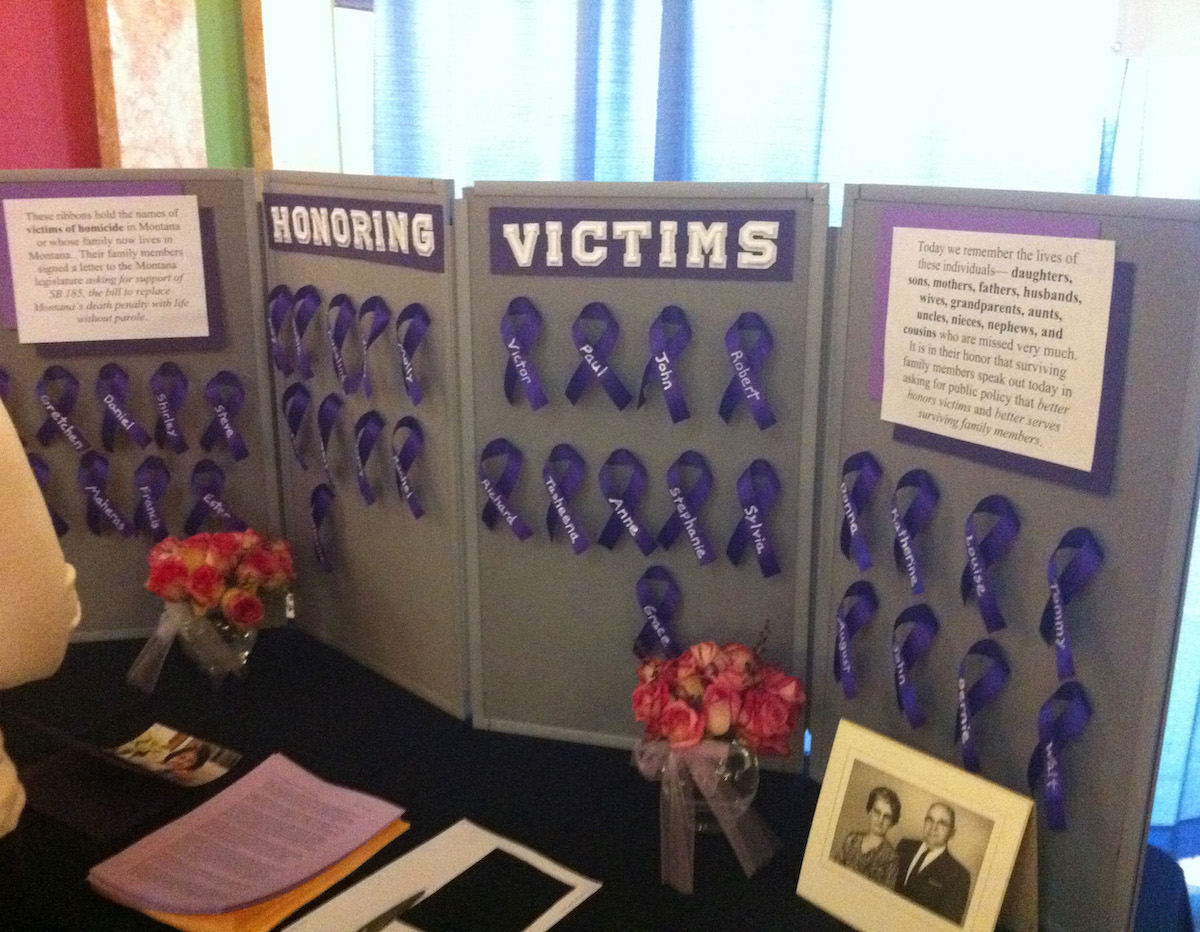
Honoring Victims

This week is National Crime Victims’ Rights Week. The theme this year is Serving Victims. Building Trust. Restoring Hope., which highlights the need for early intervention and victims services that build trust with crime survivors, and creates hope that healing is possible.

We’ve been working with crime survivors for over 10 years. And what we’ve learned from them over and over again is that these services – and a commitment to healing – remain out of reach for the vast majority of them.

Crime survivors aren’t getting the help they need

The numbers agree – estimates are that more than 90% of crime survivors don’t access any victims services. You read that right: 90% of the people in the U.S. who’ve been hurt, robbed, shot, assaulted, abused, raped, or had a family member murdered got no formal help to process their trauma, cope with their grief, or rebuild their lives in even practical ways.

Criminal justice reform has become a hot topic in the last year, and for good reason. But the analysis for building a better justice system is incomplete if the only focus is which people to get out of prison.

We must also make sure that those who have been harmed get help to heal. Sometimes those folks are even the same people. That’s easy to see just by looking at death row – packed with people who were beaten, sexually abused, and far worse, before they ever hurt another person. That doesn’t excuse what they did. It gives us a roadmap for how we can do better. What if there were more in place to help them at the time they were victimized? Might another life have been saved?

Race plays a role in who gets help

One way to fill these gaps is to expand victims services to underserved communities – including commuities of color. People of color are more likely to be victims of violence but less likely to get help for their victimization. Any call for racial equity in the justice system must include correcting that unacceptable fact.

Yet organizations that serve crime survivors of color don’t often identify as victims services organizations at all. EJUSA staffer Latrina Kelly-James described this for the Christian Community Development Association’s blog:

For example, a minister’s association that wants to put victim advocates in the neighborhood churches where violence is most rampant; a program that works with formerly incarcerated men who are victimized after their release; an association of black churches that organizes around poverty, education, and health; and many more.

These organizations and others like them may not identify as victim service providers, but so many of the people they serve have been harmed by violence. Being closest to the trauma in their communities, organizations and community groups may have informal ways of providing support, many of which are rooted in unique social, cultural, or spiritual contexts, or provide the only services available to people of color in their areas.

What you can do

You can help us reach those groups, by spreading the word about EJUSA’s VOCA Toolkit.1 This robust guide is geared for community organizations to learn how to apply for victims services funding through VOCA for the first time. The resource includes an overview of eligibility requirements, types of covered services, and ways that groups’ existing activities can align with VOCA’s guidelines. It also includes tools to help create a budget, manage funds, track data, and report impact.

EJUSA will also announce upcoming VOCA fund application deadlines on our website and through Twitter, so groups know when to apply in each state. To date, we have helped organizations in New Jersey, Louisiana, Washington, California, Colorado, Pennsylvania, New Jersey, and Michigan to navigate the process, apply, or build their capacity to apply in the future.

Together, we can ensure that the greatest possible portion of new VOCA funding reaches those most impacted by violence and least served by existing services:

  • Make sure that relevant groups you know (or your own group!) are aware of our VOCA Toolkit as a resource for seeking funding.
  • If you have questions about VOCA or need help when putting together your application, please reach out to Latrina at latrinakj@ejusa.org or (203) 823-5826.
  • Preserve VOCA funding for 2017. Later this year Congress will once again decide whether to increase, sustain, or cut VOCA funding for next year. EJUSA will let you know when it’s time to make a call to support sustaining VOCA funds at the higher level.

Thank you.

Filed under: Ready for launch

Violence & crime victims’ trauma are a public health issue: A new message for National Crime Victims’ Rights Week

Apply public health values to a broken criminal justice system

Contact: Jon Crane Phone/Email 203-982-4575
jon@criticalpr.com

Sunday April 10th will mark the start of National Crime Victims’ Rights Week (April 10-16) and this year’s theme – Serving Victims, Building Trust, Restoring Hope – is intended to highlight the need for victims services that will promote trust, healing, and recovery.

But for too many crime survivors, those services and ideals remain out of reach. Equal Justice USA, a national organization working to transform the justice system to one that heals and restores lives, recently launched a new initiative aimed at addressing the trauma of crime survivors, particularly in communities of color where there has been disparate access to resources.

“Our goal is to move towards a justice system that can actually promote health, rehabilitation, and healing,” said Fatimah Loren Muhammad, Director of EJUSA’s Trauma Initiative. “We are working to develop a justice system that operates according to public health values of prevention, harm reduction, and trauma-informed care.”

After years of work assisting murder victims’ family members during its death penalty repeal campaigns, EJUSA recognized the need for a justice system that more pro-actively meets the needs of those harmed by crime. Its Trauma Advocacy Initiative is strengthening ties between public health and the justice system through innovative projects on the municipal level.

“Families like mine and those I work with desperately need help rebuilding our lives,” said Lisa Good, victim advocate and EJUSA Board Member. “After going to so many funerals in my community, I searched for resources for crime survivors in urban areas. I was told, ‘What’s the big deal? They’re used to it.’ This attitude is just one example of the system inflicting more pain on us, dismissing our trauma instead of healing it.”

Lisa Good is part of a growing EJUSA crime survivor network that is calling for a justice system that keeps communities safe, helps crime victims rebuild their lives after they’ve been harmed, and holds people accountable in ways that are constructive and forward-looking.

Equal Justice USA (EJUSA) is a national organization that works to make the justice system more fair, effective, and responsive by ending the death penalty, strengthening programs that help crime survivors address trauma and rebuild their lives, promoting constructive responses to violence, and enacting common sense criminal justice reforms.

Filed under: Ready for launch

Another Family harmed by murder and the fight over the death penalty

Shelby Farah at graducation, courtesy of Darlene Farah

Shelby Farah was a bright, compassionate, determined 20-year-old when she was shot to death during a robbery at the Metro-PCS store where she worked. Shelby’s murder shocked the community in Jacksonville, Florida, and her family has spent the last two and a half years grieving their loss.

The death penalty has added to this trauma, as they have been forced to endure an extended legal process, increased media scrutiny, their own complex feelings about the death penalty, and a polarizing, public debate about it at a time when they need each other most.

In a column in Time, Shelby’s mother, Darlene, shared why she has decided to fight against the death penalty for the young man who killed her daughter. “The idea of having to face the lengthy legal process associated with a death-penalty case is unbearable,” she says. “We have endured enough pain and tragedy already.”

Darlene has been vocal about her wishes, but prosecutors in the case have refused offers from defense lawyers to take the death penalty off the table in exchange for a guilty plea.

Meanwhile, Shelby’s brother Caleb, who was just 16 when his sister was murdered, supports the death penalty in the case. The division in the family provides fertile ground for even more wrangling in the courts. Caleb is now also caught in the middle of a fight between prosecutors and defense lawyers.

Scenarios like this happen more than you might think.

Victims’ family members who support the death penalty sometimes discover that they are trapped in a decades-long legal battle that they couldn’t have predicted at the time of the trial. Families who oppose the death penalty might feel that they are betraying their loved one because they don’t want the harshest option available. Families in the middle – unsure of how they feel about the death penalty, or with shallow support for it – sometimes find that the responsibility of staking out a position at the most painful moment of their lives just adds more confusion and trauma to their pain.

And for families who hold a mix of these views? It can be a devastating moment of division at the worst possible time.

Darlene says she respects her son’s opinion and is glad that he is speaking out. No matter the outcome, she knows that her family will forever be scarred by Shelby’s murder and its aftermath.

Filed under: Ready for launch

Expanding partnerships between public health and justice transformation

public health scales graphic

EJUSA recently secured its first-ever partnership with a health foundation – signaling a new leap forward in efforts to link public health and criminal justice.

There has been a lot of national discussion about the need to treat violence as a public health issue, or to use a public health approach to justice reform. But what does that mean, exactly? And how to translate that important dialogue into action?

EJUSA, with the generous support of the Healthcare Foundation of New Jersey (HFNJ), will explore those questions in a new pilot program on trauma in Newark, New Jersey. HFNJ is a foundation dedicated to reducing disparities in healthcare in Newark. This investment in justice system transformation represents an exciting new area of commitment for the foundation.

“Our work in Newark over the past 20 years,” said Marsha Atkind, Executive Director/CEO of The Healthcare Foundation, “has taught us how challenging an environment the city is for the low income, underserved people who live and work there and for those who respond to their needs. We are excited that our partnership with EJUSA will help first responders and residents alike understand and deal with the trauma that they all too frequently experience and that prevents them from being all that they can be.”

The pilot will bring together police officers, community leaders, healthcare providers, and violence interrupters in Newark for both trauma training and visioning to develop trauma-informed responses to violence that can be adopted by the police department in the future.

EJUSA’s pilot work in Newark will train 125 police officers, community leaders, healthcare providers, and counselors to understand the innovative ways in which trauma-informed skills can transform our responses to violence. This will ensure that trauma survivors and witnesses have adequate resources and support in the wake of violence; that police officers have skills to de-escalate and support those in need; and that officers who experience what is known as secondary or vicarious trauma can adopt healthy practices for themselves.

“Collaboration between justice reform advocates and health advocates is essential to transforming the justice system to one rooted in healing, with racial justice and accountability front and center,” said Fatimah Muhammad, Director of EJUSA’s Trauma Advocacy Initiative.

Fatimah designed the program and galvanized support from the Mayor’s Office, Health Department, the Police Department, the Association of Black Psychologists, and community leaders for its implementation. The project will use a nationally recognized trauma training model from the Substance Abuse and Mental Health Services Administration’s (SAMHSA) GAINS Center for Behavioral Health and Justice Transformation.

The current national dialogue about the role of law enforcement and their relationship to communities of color creates an urgent and significant opportunity to address trauma in building community health and safety. Police practices can play an important role – for either good or harm.

We are hopeful that this pilot work will expand as communities demand a justice system that promotes healing and trust, not harm. And we are grateful to the Healthcare Foundation of New Jersey for taking this leap into promising new territory to create that system.

Filed under: Ready for launch

Campaign 2016: Talking to your candidates about the death penalty

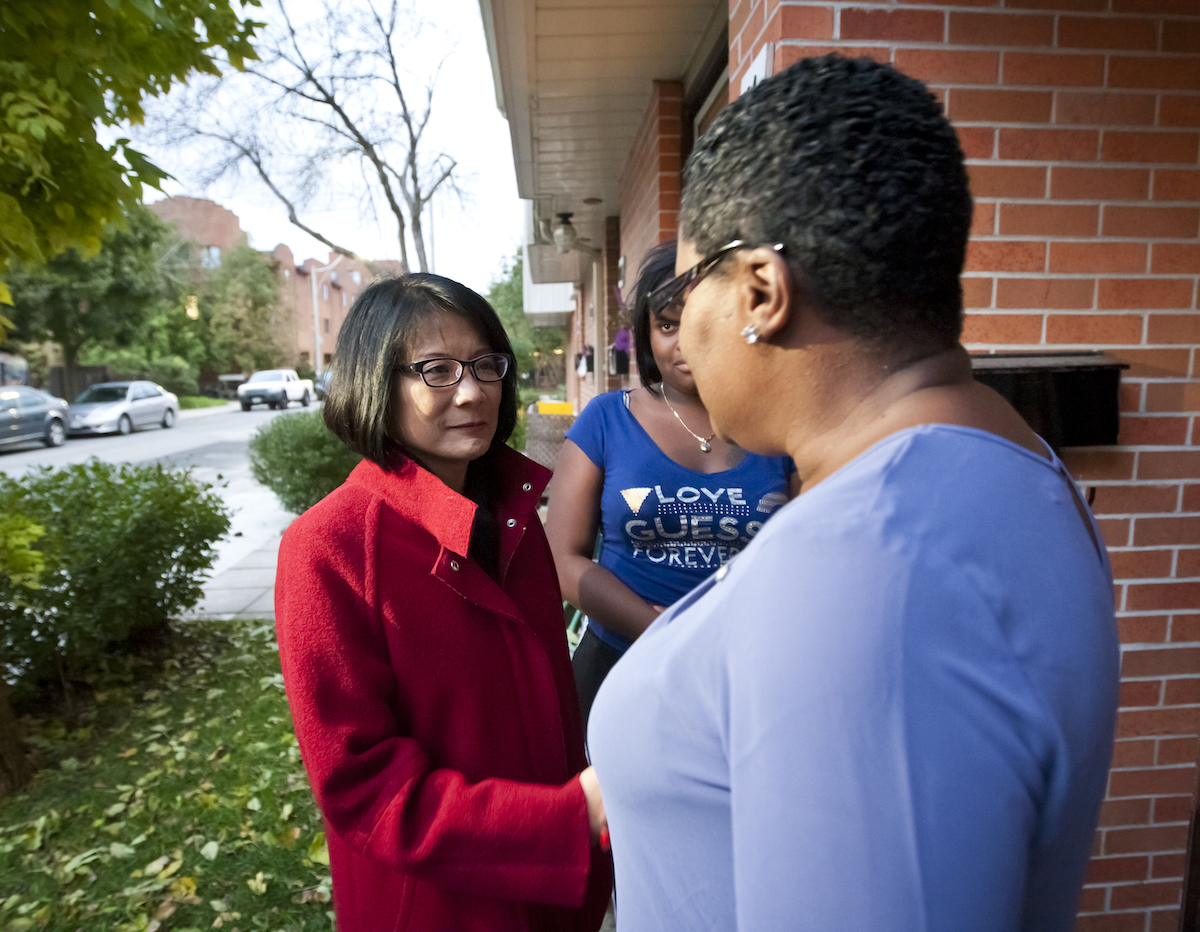
“Canvassing,” by Olivia Chow. CC BY 2.0, via Flickr.

The presidential election is in full swing. And the louder the race gets, the easier it is forget about the “down ballot” races for state legislature, mayor, county council, county prosecutor, and more. In these races, the opportunity for meaningful dialogue with candidates is much more likely.

I’m here to encourage you to talk to all your down ballot candidates about the death penalty. Why? Because state lawmakers and county prosecutors have direct impact on death penalty policy. And today’s mayor might be tomorrow’s state representative, who could one day vote on a death penalty bill in your state. You may as well start educating now.

‘Tis the season when candidates will come knocking on your door, ready to listen to you. You’ll have a captive audience with someone who cares about what you think! What a fabulous chance to broach the topic of the death penalty, don’t you think?

What’s the best way to share your support for repeal? We’re so glad you asked!

Download this tool for your campaign

The strategies you choose will depend on the issue you want to discuss with the candidates. Some issues – or personalities! – might suggest a more confrontational approach. With the death penalty, we’ve found that candidates and lawmakers respond well to education over time, rather than catching them in a knee-jerk moment. With this in mind, we’ve got a few suggested dos and don’ts for you…

Do have respectful, private conversations about the death penalty. Engaging in a one-on-one dialogue makes it easier to explore questions, share experiences, educate, and offer resources to help someone reach an informed conclusion about the issue.

Don’t ask a candidate his or her position in a public forum if they aren’t already well educated on the issue. Local candidates, especially, may not have spent any time learning about the death penalty. This can put a person on the spot before they’ve had a chance to think carefully and learn about the issue. I’ve learned that, with the death penalty, candidates (and elected officials) will often spend a long time considering their position before they come to support repeal.

[message_box  color=”yellow”]You might only have a minute or two the first time you meet a candidate. Consider the “10-second intro + info” strategy. Here’s a sample of the 10-second intro part: “Hi, my name is Mona, and I care about improving the justice system, including repealing the death penalty. I would love the opportunity to talk more with you about your criminal justice priorities.”[/message_box]

Do share your specific reasons for supporting repeal: for example, you fear the risk of executing an innocent person; it is unfair in its application; its high costs waste valuable crime-fighting resources; your faith; government shouldn’t be able to take away the ultimate liberty; etc.

Don’t shame someone for not sharing your beliefs. People don’t generally change their minds out of shame. We need candidates to keep an open mind about this issue. Think about your interaction(s) as steps in your journey to educate candidates and elected officials about this broken government system.

[message_box  color=”yellow”]Try pairing your personal experience or a fact with an open-ended question to get the ball rolling for the “info” part of your strategy: “I’ve read so many stories of men and women who have been wrongfully convicted and nearly executed. I can’t help but think we shouldn’t be in the business of putting people to death. How can we guarantee that we won’t execute an innocent person?[/message_box]

Do talk to candidates on both sides of the aisle. Opposition to the death penalty transcends party lines. Consider focusing on values you may share with a candidate such as public safety, fiscal responsibility, or support for the families of murder victims.

Don’t assume to know a person’s position on the death penalty because of how he or she might feel about another issue.

Do your research and be prepared to share information. Check out our Tough Questions or see “What Conservatives are Saying.” You can even print out some of our fact sheets by downloading them from our website: ejusa.org/learn.

Don’t tattle to the press about a candidate you hope to convince in the future. Once a candidate’s position against repeal is “on the record,” he/she may feel completely locked into that position. We want to create space for candidates to learn and for their positions to evolve.

Do listen to the response. Assume this won’t be the only time you interact. Listen to how the candidates respond to your pitch and be prepared with new information for next time!

Remember, you don’t have to wait for a knock at your door. Elections provide many venues for you to meet all of your candidates: state fairs, summer festivals, parades, campaign events and rallies, events hosted by state/local non-profits, and even at your local coffee shop. No matter where you meet a candidate, listen to what they have to say but take time to talk about the issues that are most important to YOU.

November is still a long way off, so I you hope use the time to talk to your candidates and educate them about the death penalty. Let us know how it goes!

Download the pdf[/button]


This piece was adapted from a resource published by the Montana Abolition Coalition.

Photo credit: “Canvassing,” by Olivia Chow. CC BY 2.0, via Flickr.

Filed under: Ready for launch

Death penalty repeal gains momentum in Utah

"State of Utah Capitol Building" by vxla. CC BY 2.0, via Flickr.

Utah Senators approved legislation to repeal the death penalty last night by a vote of 20-9!

The Republican sponsor of the bill, Senator Steve Urquhart, used to support the death penalty. Just last year, he joined most of his Republican colleagues (only 5 of the 29 Senators in Utah are Democrats) in a vote to bring back the state’s firing squad. Now, Senator Urquhart is leading the charge against the death penalty.

Read about Senator Urquhart’s quest for repeal in the Washington Post, which also features Marc Hyden, coordinator of EJUSA’s national project, Conservatives Concerned About the Death Penalty.

Read the Salt Lake Tribune story about yesterday’s vote.

Photo credit: “State of Utah Capitol Building” by vxla. CC BY 2.0, via Flickr.

Filed under: Ready for launch

Health Approaches to Healing Violence: Hospital-Based Programs

]Violence is a public health issue. But few know that there is a small, but significant expansion of health initiatives across the country that are addressing the needs of survivors of crime, violence, and trauma, in the wake of community violence – and helping to actually decrease crime.

Philadelphia, a pioneer in trauma-informed models of care, has a larger-than-life team of researchers, medical doctors, and other practitioners that have developed programs and initiatives that have transformed the ways in which the health system can work along with the justice system to heal violence.

Top among these innovative programs is the hospital-based program, “Healing Hurt People.” This program was designed by Dr. Ted Corbin and Dr. John Rich, Co-Directors of Drexel University’s Center for Nonviolence and Social Justice. It not only provides victims of gunshot wounds and other traumatic physical injuries with medical rehabilitation, but also provides trauma treatment and job readiness training to help survivors thrive. Since many homicides are a reaction to victimization, this program is helping to curb violence.

A study conducted out of The R. Adams Cowley Shock Trauma Center’s hospital-based program in Baltimore found that participants were half as likely to be convicted of any crime and four times less likely to be convicted of a violent crime following their participation in the program. Furthermore, participants were less likely to become re-victimized through a fatal injury. San Francisco General Hospital’s Trauma Recovery Center reports a successful return to employment (56%); reduction in homelessness (41%); and a significant cost savings to the state as it treats victims of crime.

At least 35 hospital-based programs exist across the country that address the trauma of crime survivors who are most likely to experience more violence, become justice-involved, or worse, become a homicide victim.

Why aren’t programs like these in every jurisdiction that needs them? EJUSA’s Trauma Advocacy Initiative supports a broader movement of survivors calling for responses to violence that serve victims, heal neighborhoods, and provide meaningful advancement for communities plagued by structural racism.

Filed under: Ready for launch