
Category: Ready for launch

Why I Joined the EJUSA Associate Board

Sam Kuhn

by Sam Kuhn, EJUSA Associate Board

When my friend Erin Ellis approached me with the prospect of joining the EJUSA Associate Board, I jumped at the opportunity. EJUSA’s work to make the criminal justice system more fair, effective, and responsive is right in line with the values my work at the National Network for Safe Communities at John Jay College of Criminal Justice. Ending the death penalty and developing a just, trauma-informed response to crime and violence are new frontiers for me in the complex fight to reform the justice system.

Working with EJUSA also gives me the opportunity to explore other strategies for creating social and systemic change. At the National Network, we provide direct technical assistance to law enforcement, community leaders, and social service providers in cities across the country to enhance public safety, minimize the use of incarceration, and reconcile police and communities of color. Much of our work involves building close relationships with stakeholders who can change institutional practice and culture from within. But EJUSA’s long and impressive track record of grassroots organizing clearly demonstrates the importance of moving the ball forward on multiple tracks – as advocates seeking to educate the public and lawmakers and as trusted advisers to decision-makers in the field.

Finally, working with the Associate Board is an exciting opportunity for mutual growth at an exciting time for justice reform. The advantages for me are obvious: working with smart, interesting, likeminded people in the pursuit of a common goal, while gaining exposure to new tactics and concepts in the struggle for a more equitable society. But I hope that I have something to offer as well: my time and energy; my experience with communications, recruitment, and fundraising; and, perhaps most usefully, the perspectives and networks I’ve developed while working with the National Network.

As the U.S. undertakes the messy, and necessary, process of reconsidering its justice system, it seems important to make sure that those with similar visions for the future work closely together where it makes sense. I’m ecstatic to have the privilege of contributing my energies to EJUSA’s mission.

Are you a New York City-area professional who shares our vision, loves to network, and wants to make an impact? Then the EJUSA Associate Board is looking for you! Build bridges and your resume; make an impact nationally and support a locally-based nonprofit; share your passion for justice and have fun doing it. For more information or to apply, contact Andrea at andreab@ejusa.org or (718) 801-8946.

Filed under: Ready for launch

Halt executions during Year of Mercy, says Pope Francis

2014 Pastoral Visit of Pope Francis to Korea

by Megan Ward, Catholic Mobilizing Network

Pope Francis has become a torchbearer of peace and justice, not just for Catholics, but also for many people around the globe. Last week, he appealed directly to public officials, especially those who are Catholic, to “make a courageous and exemplary gesture by seeking a moratorium on executions during this Holy Year of Mercy.”

The custom of celebrating a Holy Year – or “Year of Jubilee” – is rooted in the biblical Law of Moses that established every fiftieth year as a special Holy Year. During this time, debts were forgiven, fields were left fallow, land restitution was practiced, and slaves and prisoners were set free.

Because mercy holds the hope of rehabilitation, this year is an invitation for society to reflect on the central values in our criminal justice system. We must consider the goals of justice: Does the law simply dole out payback? Or is the goal to restore and repair harm caused by violence?

During his recent trip to Mexico, Pope Francis addressed these questions in a visit to a prison in the border city of Juarez. As he addressed a crowd of prisoners, some of whom were moved to tears, the Pope spoke a message that resonated in the hearts of many worldwide:

“We have already lost many decades thinking and believing that everything will be resolved by isolating, separating, incarcerating, and ridding ourselves of problems, believing that these policies really solve problems. We have forgotten to focus on what must truly be our concern: people’s lives; their lives, those of their families, and those who have suffered because of this cycle of violence.”

Pope Francis has challenged public officials to celebrate the Holy Year of Mercy by halting executions. Let us also challenge ourselves to work for a justice system that values healing over punishment.


Megan Ward is Director of Engagement at the Catholic Mobilizing Network to End the Use of the Death Penalty. She works to promote Catholics in the movement to end the death penalty, with a special focus on imminent legislation. 

Filed under: Ready for launch

EJUSA joins new national dialog on public health and criminal justice

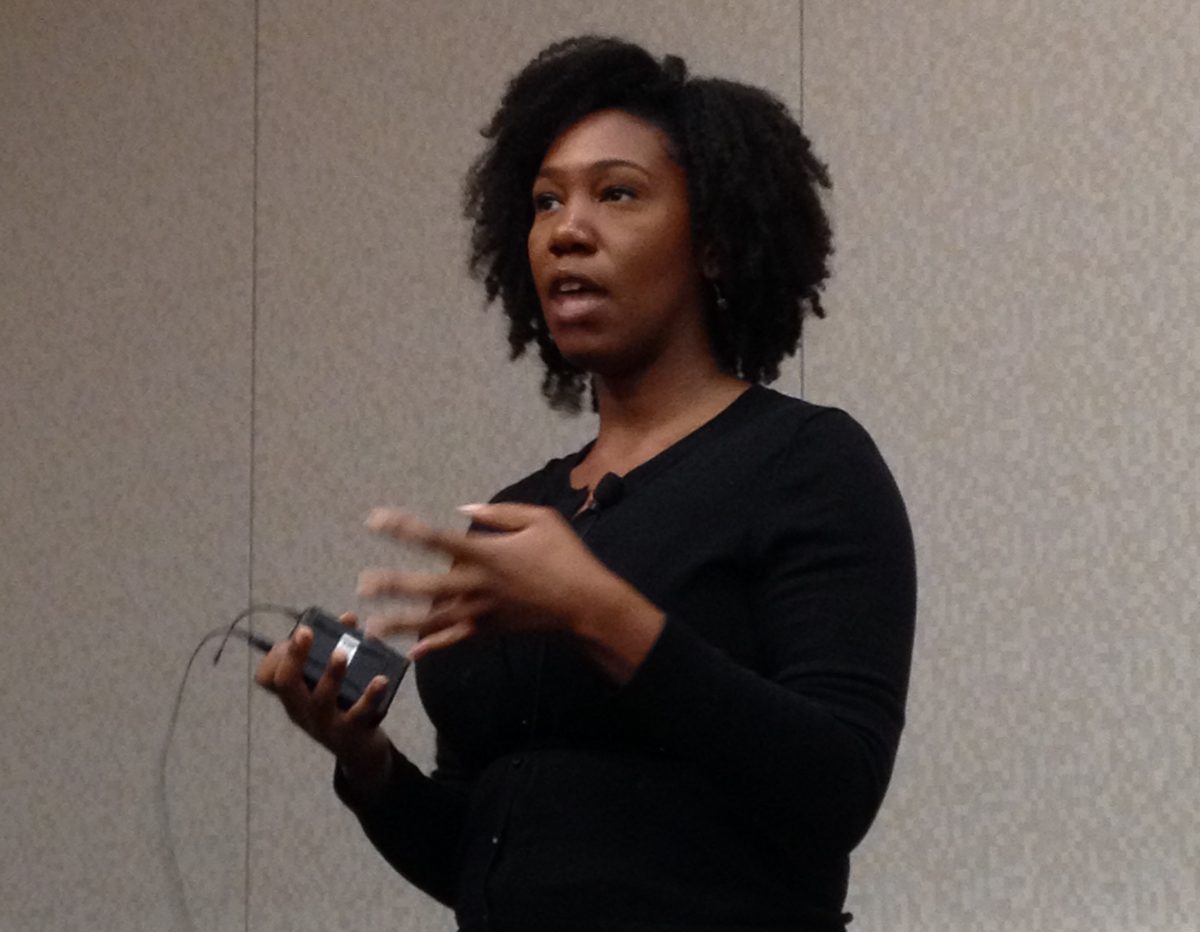
Fatimah speaking

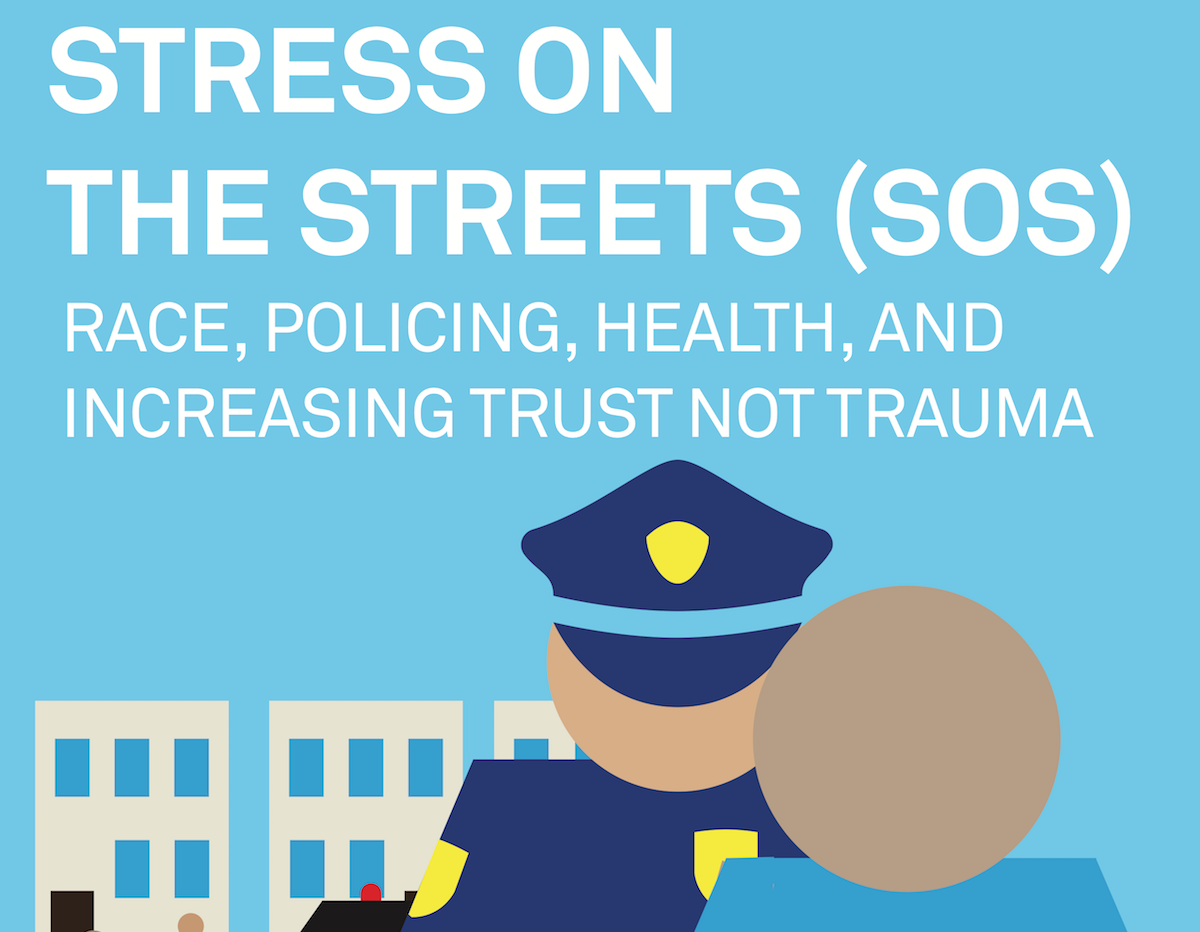
There is a growing interest in reimagining the relationship between the public health and the justice systems. Our coverage of the new report, “Stress on the Streets (SOS): Race, Policing, Health, and Increasing Trust, not Trauma,” last month highlighted innovative ways that public health and criminal justice reform organizations are collaborating to do just that.

Another example is a new collaborative organized in part by one of the report’s authors, Human Impact Partners. They worked together with the Vera Institute of Justice to organize the Criminal Justice and Public Health National Convening last November (with support from the Ford Foundation and Open Philanthropy), which I attended.

The goal of the convening was to build a movement of cross-sector partnership and collaboration to end mass incarceration and move towards a justice system that can actually promote health, rehabilitation, and healing.

I was recently brought on to the advisory committee to help shepherd the future development of this work. More than 30 national and local organizations make up the core group that is working to develop a larger mission and vision for a criminal justice system that operates according to public health values of prevention, harm reduction, and trauma-informed care.

What if more public health systems viewed harm in the criminal justice system as a health problem to be analyzed? What if criminal justice reform groups began to understand and frame issues of criminal justice through the lens and principles of public health? What if public health and criminal justice reform organizations could work together to build a justice system that works?

EJUSA’s trauma advocacy initiative is strengthening ties between public health and the justice system through innovative projects on the municipal level. I am able bring these experiences to the national collaborative’s working groups, which are focused on cross-sector collaboration, policy change, best practices, metrics, and more.

We are excited about the opportunity to explore these questions and contribute to these national conversations about building a new justice system.

Filed under: Ready for launch

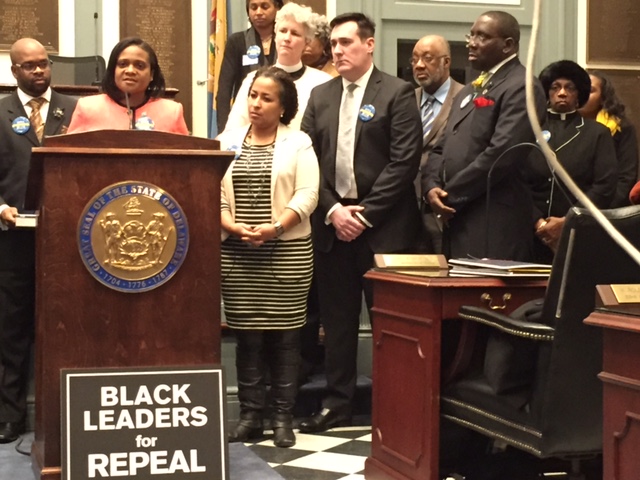
Huge strides made in repeal efforts in Delaware

Delaware Black Leaders for Repeal

Lawmakers in Delaware allowed a bill to repeal the death penalty to get a full debate on the House floor for the first time. The bill had been stuck in the House Judiciary Committee for the last several years.

The growing coalition in Delaware is fired up at having broken through the logjam. Though the bill did not pass, the fight is not over. In fact, there is still a chance the bill will have another day on the House floor in 2016.

Over the last several months, a groundswell of activity from Delaware’s African American community has changed the conversation about that death penalty. There is more recognition than ever that racial justice in Delaware means the death penalty has to go.

During last week’s debate over the death penalty repeal bill, it was clear that this message has reached legislators. Almost every repeal supporter who spoke on the floor noted the need to meaningfully address the racial disparities that undermine the integrity of the entire criminal justice system by getting rid of the death penalty.

Bryan Stevenson, the Executive Director of the Equal Justice Initiative, himself a Delaware native, was also invited on the House floor to speak in favor of repeal. He confirmed that repeal is a major civil rights issue, noting that Delaware cases in which a victim is white are more likely to result in a death sentence.

“These disparities create this fear, this concern that the lives of some people matter less than others,” Stevenson said in a press conference before the debate.

Meanwhile, the Delaware courts are also weighing in. During the debate, lawmakers learned that the Delaware Supreme Court agreed to hear a challenge to Delaware’s death penalty statute based on two recent U.S. Supreme Court decisions. And just a few days later on Monday, a Superior Court Judge suspended all 39 pending capital cases until the ruling from the State Supreme Court.

The action is not isolated to Delaware. Momentum for repeal swept through a number of states this week.

On the same day as the floor vote in Delaware, a group of 17 Kansas legislators from both sides of the aisle officially launched the repeal campaign at a Capitol press conference. Joining the legislators was Floyd Bledsoe, who just a few weeks ago was released from prison after being exonerated of a murder he did not commit. “We must stop the death penalty today,” he said. “Tomorrow it might be too late for one person.”

Also on that same day, lawmakers in New Hampshire heard testimony from a death row exoneree, clergy, law enforcement, a former FBI Special Agent, a former New Hampshire Attorney General, a former New Hampshire Supreme Court Justice, several murder victim family members, and more. More than 20 people spoke in favor of a bill to suspend executions.

In Missouri, a legislative committee passed a Republican-lead repeal bill to the Senate Floor. A week later, an investigation revealed that the corrections department has been handing cash-stuffed envelopes to consultants after executions, likely in violation of tax law. When lawmakers responded to the investigation, some state officials said that obeying tax law would mean they’d have to end the death penalty.

And in Florida, executions are officially on hold while lawmakers grapple with the implications of last month’s Supreme Court ruling that invalidated the state’s death penalty scheme. It seems there is no clear path forward, with experts offering different options for ways to “fix” the law, and no legislation sure to pass.


Filed under: Ready for launch

EJUSA supports #LockedInSolidarity – *Updated*

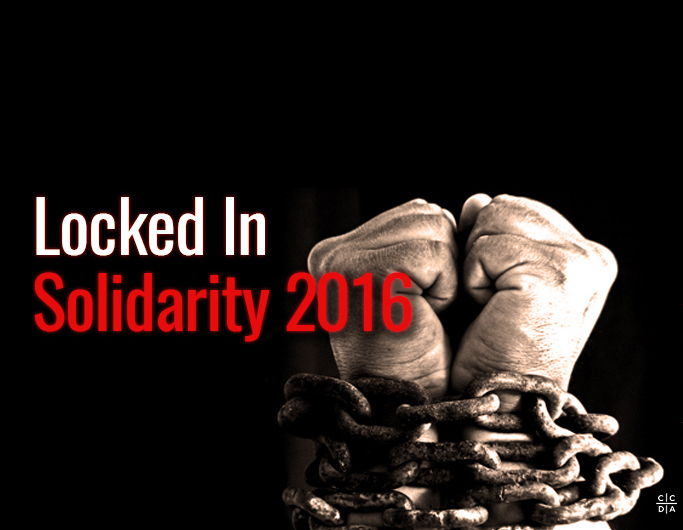
Locked In Solidarity - CCDA

For several years, the Christian Community Development Conference has held a national prayer and advocacy day, called “Locked in Solidarity,” to highlight the injustice of mass incarceration. It is a day when their member and participating organizations hold events and prayer vigils to share lament, hope, and stories as they seek a response to the broken criminal justice system.

This year, EJUSA stands with CCDA for Locked In Solidarity 2016. We see this as an important opportunity for religious communities to reflect on their role in reimagining and reforming criminal justice and to give individuals an opportunity to take meaningful actions.

Find an event near you.

We will be updating this post with information about Locked In Solidarity events around the country, and we will also be posting updates to our Twitter feed, using #LockedInSolidarity.

Here is a short reflection from Heather Beaudoin, who directs evangelical outreach for EJUSA, about the importance of this event:

I am thrilled to see that CCDA is lifting up criminal justice issues and mass incarceration. I pray that the Locked in Solidarity events around the country will bring to light the struggles that so many of our brothers and sisters have been facing. As Christians, we must respond. Our criminal justice system is riddled with injustice, and we cannot stand idly by and watch as lives are broken and families fall apart.

There is much work to do, but I remain hopeful. I am hopeful because of the incredible work of organizations like CCDA. Let us continue to join forces to work to make our criminal justice system a system that works for everyone. Let us rise up and raise our voices to make change. For as it says in Proverbs 37:8-9, “Speak up for those who cannot speak for themselves, for the rights of all whoa re destitute. Speak up and judge fairly; defend the rights of the poor and needy.”

Filed under: Ready for launch

Why conservatives are abandoning the death penalty

Earlier this week, an article that I wrote was published in the ultra conservative Washington Examiner. In the piece, I expanded on the conservative case against the death penalty.

I wrote:

Regardless of whether one supports the death penalty in theory, in practice capital punishment has a long documented history of failing to live up to conservative principles.

We conservatives pride ourselves on abiding by our foundational tenets, including promoting pro-life policies, fiscal responsibility and limited government, but the death penalty violates each of these core values.

But the government’s track record suggests that perhaps it is unwise to entrust it with the authority to execute its citizens. I closed by stating,

Until the government can prove its infallibility and its capacity to fairly, efficiently, and properly administer its programs, it is only prudent to support repealing the death penalty, and therein lies the simple reason why conservatives are increasingly opposing capital punishment.

Conservatives Concerned About the Death Penalty (CCATDP), a project of Equal Justice USA, is a network of political and social conservatives who question the alignment of capital punishment with conservative principles and values. For news and updates from CCATDP, join their email list.

Filed under: Ready for launch

High School Seniors: Win a scholarship for writing about the death penalty!

Our friends at the Legislative Initiative Against the Death Penalty (LIADP) are sponsoring a writing contest for high school seniors (class of 2016). LIADP’s Pauline Underwood Memorial Scholarship urges students to write a persuasive letter to the editor, supporting repeal of the death penalty in their state.

Author of the winning letter will receive a $1,000 scholarship for the first year of college, with one honors recipient receiving $500.

Letters should be approximately one double-spaced type-written page in length and should convince the reader that your state should repeal the death penalty. If your state has already ended the death penalty, the letter should explain why you approve. A good letter will concentrate on one or a few reasons why the death penalty should be repealed. Give references that support your belief.

All quotations and paraphrases should be noted in the body of your letter (example: The Green Valley Weekly states on page A6, 10/10/15, that ‘killing prisoners is NEVER necessary’). Do not use footnotes or a bibliography in your letter.

Applications must be received by February 1, 2016 and must include three hard copies of the letter sent to:
Legislative Initiative to Abolish the Death Penalty
Po Box 15
Loysville, PA 17047

Filed under: Ready for launch

EJUSA’s Shari Silberstein on TV

Former New York City Council member Ronnie M. Eldridge hosted EJUSA Executive Director Shari Silberstein for her 30-minute show, Eldridge & Co. The show airs several times this week on local New York City’s CUNY TV with Shari and Ronnie talking about the national decline in the death penalty, EJUSA’s campaigns in favor of repeal, and our growing work with crime survivors.

Watch the whole episode:

Filed under: Ready for launch

Trust Not Trauma – Policing and Public Health

An important new report looks at the relationship between policing practices and public health. Stress on the Streets (SOS): Race, Policing, Health, and Increasing Trust, not Trauma, released last month by Human Impact Partners, the Ohio Justice & Policy Center, and the Ohio Organizing Collaborative analyzed police practices in two cities – Cincinnati and Akron.

“The tension and distrust between people of color and police in the United States is an underestimated public health crisis,” the report opens. “Shocking cases of mistreatment, injury, and death grab headlines and go viral on social media, but the mental, emotional, and behavioral impacts of this fraught relationship affect communities of color and police officers in ways less often discussed.”

The report outlines the following four models of policing:

  • Community-oriented policing described by a White House task force as police working “with neighborhood residents to coproduce public safety.”
  • Problem-solving policing, in which police seek to proactively identify and address the root causes of crime.
  • Focused policing, including cracking down on a specific crime or offense, stepping up police presence in hot spots, and focusing on repeat offenders.
  • Standard policing, which targets all crimes across an entire jurisdiction and aims to improve public safety by increasing the number of police, random patrolling, or responding more rapidly to calls.

They suggest that the standard model is the least effective in reducing crime, building trust, and addressing inequities, while the problem-solving model is most effective, especially when combined with the community-oriented model. They found that Akron’s policing model is most similar to the standard model, while Cincinnati uses community-oriented and problem-solving policing.

Check out the recommendations, see the new website, and read the full report here.

Filed under: Ready for launch