
Category: Ready for launch

The Weight of the [Heart] Work

EJUSA works with dozens of community groups and grassroots leaders who have dedicated their lives to reducing violence in their communities.

Daily, these groups – many of whom are volunteers – are on the scene when someone is murdered. They help de-escalate situations, act as the liaison between police and families, offer support to grieving loved ones, provide art therapy to young children who’ve been exposed to violence, counsel shooting victims in the hospital, and more. The list goes on. These volunteers are often women of color who’ve lost their own children to violence or former youth detention professionals who mentor children who’ve been victimized.

This is heart work.

But even heart work needs head work – specifically funds to keep the doors open and strategic plans to reach the greatest number of people.

EJUSA has been working with these groups to help drive federal victim services funding (called VOCA funds) to communities of color that have never had them. We provide the technical know-how to help them manage their finances, develop program models, track their impact, and write grants. They make sure survivors and victims’ families receive life-saving support and healing free of cultural or social bias.

As we dive deeper into this work, we’ve been hit hard by the reality that many of our partner groups are too overwhelmed with crisis and tragedy to focus on the forward thinking work of obtaining VOCA funding. This summer alone, a 15-year old girl in one sex-trafficking group was murdered. A youth in a mentoring program was murdered. Six people were shot in one neighborhood in the span of a weekend. Three died. One leader lost her sister while in the midst of also losing a client.

How can anyone strategically plan to expand a victim services program, respond and be present when crisis occurs, and still figure out how to take care of your household, your family, or yourself?

These conditions can mean chronic back pain, anxiety, or headaches for them and for us. We have to be patient with groups even though they miss calls or can’t finish key tasks as grant deadlines loom. And we must be patient with ourselves when we have to work extra hard to fill those gaps. Most of all we often need to tell our partners to take a break, get rest, and practice self-care. And then we need to tell ourselves the same thing.

As heart workers, we all experience vicarious trauma – the negative effects of caring about and for others. It’s a heavy burden to carry. The work will not stop, but we need to ensure our physical, mental, and emotional health. We must identify the activities and practices in our lives that can make us smile and relax. Exercise. Eat right and drink water. Manage our time well, and don’t criticize ourselves for missing a deadline or a task. And cry. Cry, cleanse, and then get up and keep going.

Trauma is difficult and we are human. To all of you who do this work, we support your well being and your spirits. Be good to each other, and to yourself.

Photo credit: “Peace March For Richmond Rape Victim-1-9” by Demond Henderson. CC BY-NC-ND 2.0, via flickr.
Filed under: Ready for launch

That hopeful place

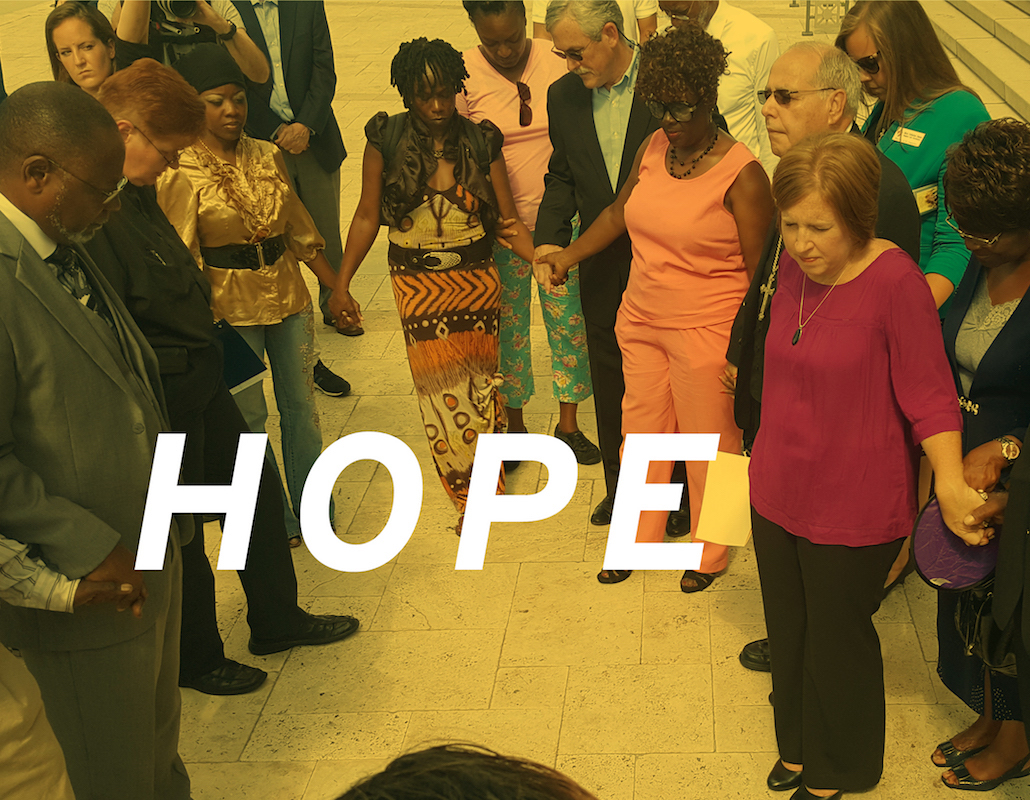
HOPE

Sometimes it’s hard to stay hopeful.

There are days when it feels like humanity is lost, that hate and racism and violence are everywhere. Solutions feel too small, and far away.

These are the times when I am most grateful for your partnership. I don’t give up because I know you won’t either.

You’ve been in the fight with EJUSA a long time. Early on you rejected the false promise that executions could provide healing. You knew all along that there was something better, more beautiful, more hopeful than the futility of responding to violence with more suffering.

Stay in the fight with EJUSA with a gift of $25, $50 or even $100, and let’s find that hopeful place together.

With hope and determination, we will transform the way our nation responds to violence. Together we will bring down the death penalty, end racial disparities in care for people impacted by violence, and address community trauma. Together, we will build a justice system rooted in healing and racial equity.

Thank you for your continued partnership in this important work.

Filed under: Ready for launch

In memory of murder victims, set new priorities for action

Dorothy & Shari

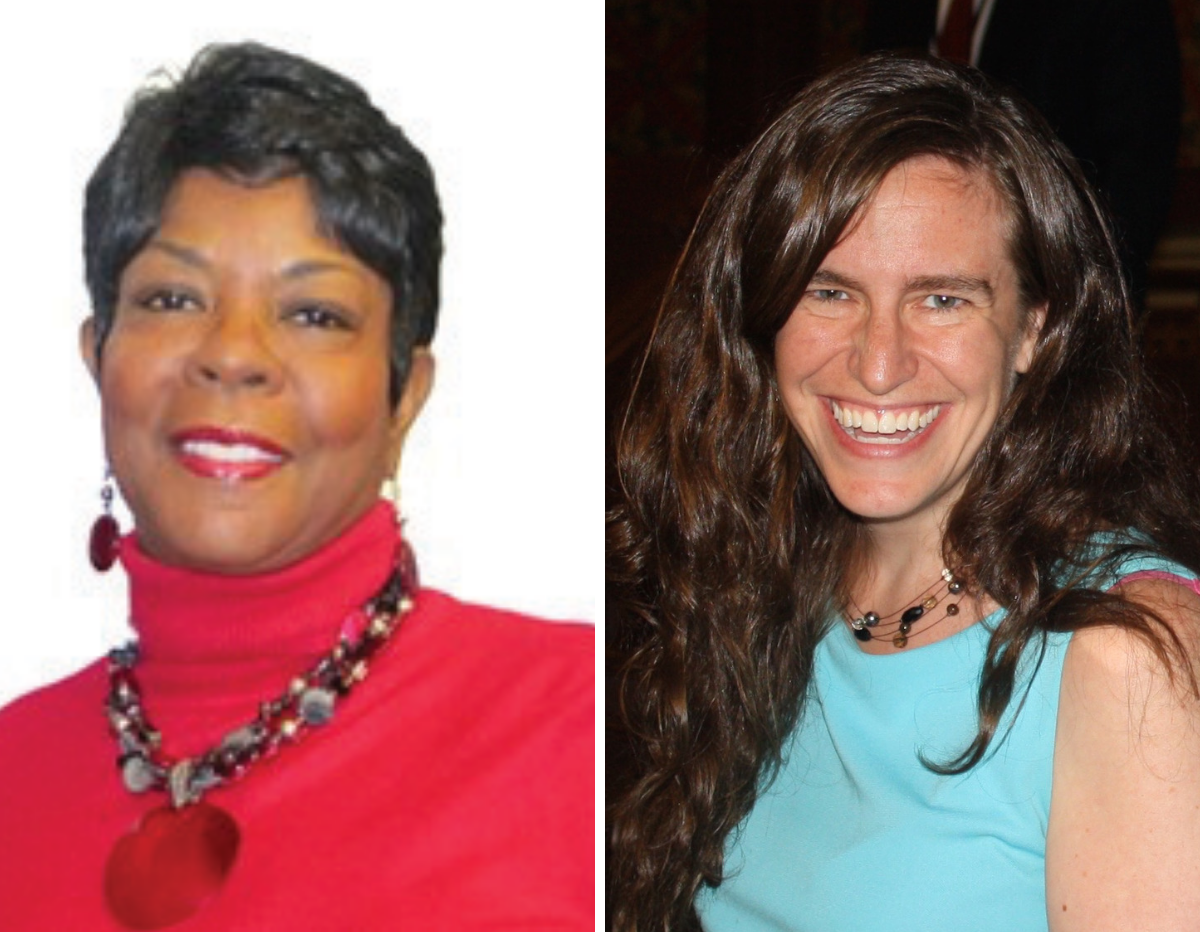
It is more urgent than ever that we honor victims of violence by responding with healing, racial equality, and prevention. That was the message in an op-ed by EJUSA Executive Director Shari Silberstein and Dorothy Johnson-Speight from Mothers in Charge, published this week in the Philadelphia Inquirer.

To commemorate the National Day of Remembrance for Murder victims, Shari and Dorothy joined together to call for a new approach to addressing violence – one that recognizes that violence and homicide are a public-health crisis that needs a public-health solution, and that solution must be rooted in racial equity.

Homicide is the leading cause of death for African American males ages 15 to 34. For too long, the response to this crisis has been aggressive policing and incarceration. But mass incarceration, traumatizing police interactions, and a lack of care and support for people who experience violence have all worked to further devastate low-income black communities.

More and more policymakers, public-health officials, and law enforcement officials are coming to realize that we can’t arrest our way out of this problem. Yet the public dollars spent on violence prevention and survivor support are dwarfed many times over by the billions of dollars spent on corrections. The survivor support that does exist is far below the need, and it rarely gets to communities of color, even though they experience the highest rates of homicide and gun violence.

If we’re serious about building safe and healthy communities – and rebuilding communities most impacted by violence – our public dollars must reflect a different set of priorities.

Read the full op-ed here.

Filed under: Ready for launch

Honoring lives lost to violence

Today is the National Day of Remembrance for Murder Victims.

To all of our supporters who have lost a loved one to homicide, we are thinking about you today. We honor your loved ones and their beautiful, all-too-short lives.

We honor lives lost to community violence, police violence, family violence, gun violence, and all forms of violence.

We remember. We honor. We fight for justice.

#TrueJusticeIsHealing

Filed under: Ready for launch

On National Day of Remembrance, communities call for an end to the violence

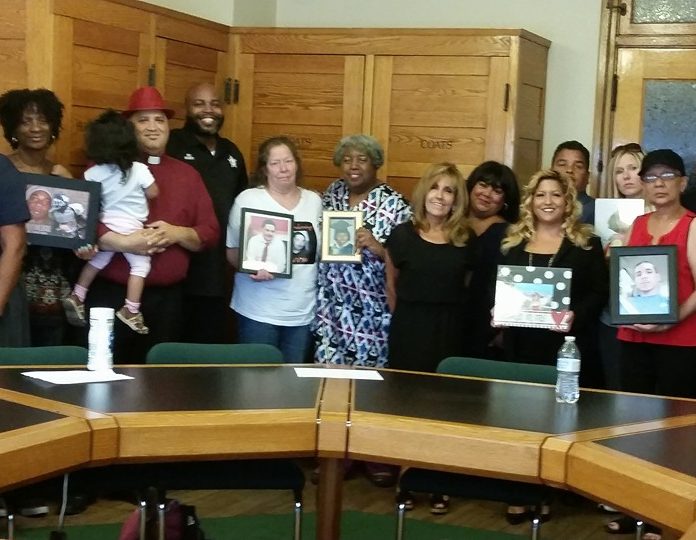
Community violence prevention groups from around the country gathered yesterday for National Day of Remembrance for Murder Victims. EJUSA’s longtime partner, Mothers In Charge, and its affiliates and coalition partners held press conferences to honor their loved ones and to renew their call for investment in public health approaches to violence prevention.

“It is time to do more than just remember our loved ones,” said Dorothy Johnson-Speight, Founder and Executive Director of Mothers in Charge, who was joined in Philadelphia’s City Hall with other families of homicide victims as well as the Mayor, other lawmakers, and community leaders.

“EJUSA is pleased to support this national day of action by our partners, Mothers in Charge, as they mark the day and call for a public health response to homicide,” said EJUSA Executive Director Shari Silberstein in a statement.

“Every year there are more than 14,000 people murdered in America. Countless grieving parents, brothers, sisters, children, and other loved ones are left behind to pick up the pieces of their lives. And young men of color are the most likely to be victims of this public health crisis.

“It’s time to commit to a new path forward. We need trauma-informed responses to violence that save lives, rebuild communities, and prevent future violence. We need to understand the pain in communities of color built up over generations of racism, violence, and poverty, and ensure that responses to violence help instead of harm. We need to stand up as a nation to honor those killed by taking care of those left behind.”

Mothers in Charge affiliates in Kansas City, MO; St. Louis, MO; Atlantic County, NJ; Harrisburg, PA; San Francisco, CA; Berkeley, CA; Los Angeles, CA; and Palo Alto, CA; along with coalition partners in Brooklyn, NY; Baltimore, MD; South Bend, IN; Detroit, MI, and Chicago, IL all participated in the press conferences. These groups are on the front lines every day fighting violence and helping families heal after tragedy strikes in their cities.

The National Day of Remembrance for Murder Victims is commemorated every year on September 25. In 2007, Congress designated the day for families and communities to come together, to share the memories of those lost to violence,  and to never forget.

Photo credit: Robert Torres of the Chicago-based Parents for Peace and Justice.

Filed under: Ready for launch

Newark, NJ: Trauma-Informed Responses to Violence: Police/Community Training Initiative

Equal Justice USA is leading an effort to increase the capacity for police and the community to respond to trauma in the wake of violence. This fall, a team of facilitators will be leading trainings on trauma-informed responses to violence with the Newark Police Department and Newark community members: “Trauma Informed Responses to Violence: Newark Police/Community Training Initiative”

The goal of this training is to understand the symptoms of community trauma and vicarious trauma as well as build necessary skills to address and problem-solve when trauma arises. These trainings will focus on community/police partnerships, and each group training will consist of the following:

  • 3 weekly sessions, 4 hours each.* Sessions will be held at Newark Police   Department Training Division (1 Lincoln Ave., 3rd Floor Newark, NJ 07104),
  • Participants will include 10-12 police officers and 10-12 community members,
  • Learn about trauma symptoms, ACES, historical trauma, and the cycle of violence,
  • Hands-on skills-building and problem solving activities that will be customized for trainees on the front lines addressing violence and trauma.
  • A focus on addressing special populations, including boys/men of color, LGBT communities, girls and women, etc.

Community leaders from all sectors are invited to participate in these trainings.

Download the flyer here.

If you would like to register as an INDIVIDUAL, please click here.

If you would like to register as a GROUP, please click here.

Once you register, you will be notified that you have been accepted. Seating is extremely limited and will be offered on a first come, first served basis. Newark Residents are given priority.

If you have any questions, please contact Fatimah Loren Muhammad at fatimahm@ejusa.org

This training has been made possible through the generous support of the Healthcare Foundation of New Jersey and contributions from: NJ Association of Black Psychologists, Urban Renewal Corp, Newark Anti-Violence Coalition, Safer Newark Council, Violence Intervention & Prevention Specialists, Fierro Consulting, LLC, and JR Belk Consulting.


*Session Dates:

Group A
Tuesday, September 27, 4-8 PM
Tuesday, October 4, 4-8 PM
Tuesday, October 11, 4-8 PM

Group B
Wednesday, September 28, 4-8 PM
Wednesday, October 5, 4-8 PM
Wednesday, October 12, 4-8 PM

Group C
Monday, September 26, 4-8 PM
Monday, October 3, 4-8 PM
Monday, October 10, 4-8 PM

Group D
Wednesday, October 26, 10-2 PM
Wednesday, November 2, 10-2 PM
Wednesday, November 9, 10-2 PM

Group E
Wednesday, October 5, 4-8 PM
Wednesday, October 12, 4-8 PM
Wednesday, October 19, 4-8 PM

Group F
Wednesday, November 2, 4-8 PM
Wednesday, November 9, 4-8 PM
Wednesday, November 16, 4-8 PM

Filed under: Ready for launch

Healing Justice 2016

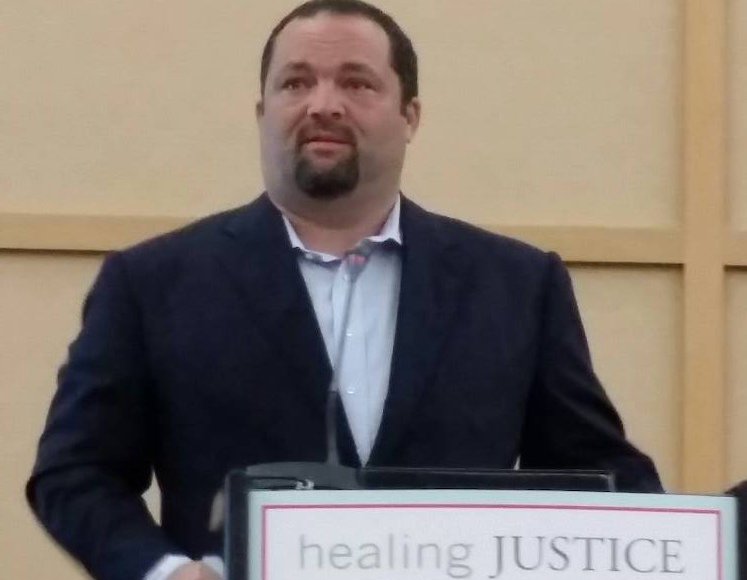
Ben Jealous at the Healing Justice Conference

Ben Jealous at Healing Justice 2016EJUSA attended the 6th Annual Healing Justice Alliance Conference, a convening that brought together crime survivors, innovative community-based violence prevention programs, hospital-based violence reduction programs, and other criminal justice and public health partners.

EJUSA is pleased to have been a part of a number of convenings in recent months that break down silos between public health, criminal justice, violence prevention, and victimization – including our recent meeting at the White House and a presentation at the DOJ National Conference on Youth Violence Prevention. The powerful Healing Justice Alliance conference was no exception.

More and more Americans are embracing the idea that mass incarceration has failed communities most impacted by violence, particularly devastating communities of color, and that we need a new approach.

Continue reading

Filed under: Ready for launch

Latino lawmakers take stand against death penalty

NHCSL logo

The National Hispanic Caucus of State Legislators (NHCSL) met last month as part of the annual conference of the National Conference of State Legislators. One of the items on their agenda was a resolution calling for an end to the death penalty. Though they had originally planned to take up the measure at their meeting in December, they agreed that it was past time to take a stand on the “civil rights issue of our time,” as one member put it.

The resolution was overwhelmingly approved with bipartisan support. “After carefully reviewing the clear evidence of anti-Latino bias in the application of the death penalty, the high costs of death row to tax payers, and the ineffectiveness of capital punishment in reducing crime,” the NHCSL said in a statement, “Latino lawmakers called on Congress, and all states and localities to immediately repeal the death penalty.”

EJUSA has been working with members of the NHCSL as they considered the resolution. In her press statement, the lead sponsor urged her colleagues to work with us for nationwide repeal.

“I encourage all states to follow the example of New Jersey in eliminating the death penalty,” said sponsor and Assemblywoman Annette Quijano, D-New Jersey, “and I look forward to working to eliminate it throughout the United States with the help of other advocates such as Equal Justice USA.”

Supporters of the resolution included those from both death penalty states and non-death penalty states.

“Studies show that nationwide, Latinos are imprisoned at a rate 1.4 times the rate of whites, and that white juries are more likely to sentence a Latino defendant to death,” read the resolution. Nationally, Latinos are murdered at twice the rate of white people, but less than 7% of victims in pending death penalty cases are Latino.

NHCSL is a non-partisan group made up of almost 400 Hispanic legislators from around the United States, including Puerto Rico and the Virgin Islands.

Earlier this year, EJUSA also worked with the National Hispanic Leadership Agenda, a coalition of 40 prominent Latino organizations, which called for an end to the death penalty in their annual policy agenda. It was the first time they included criminal justice reform in their priorities, and groups like Latino Justice, MALDEF, and LULAC, who have longtime positions against the death penalty applauded the focus on the issue.

Filed under: Ready for launch

Florida county responds after death penalty ‘outlier’ report

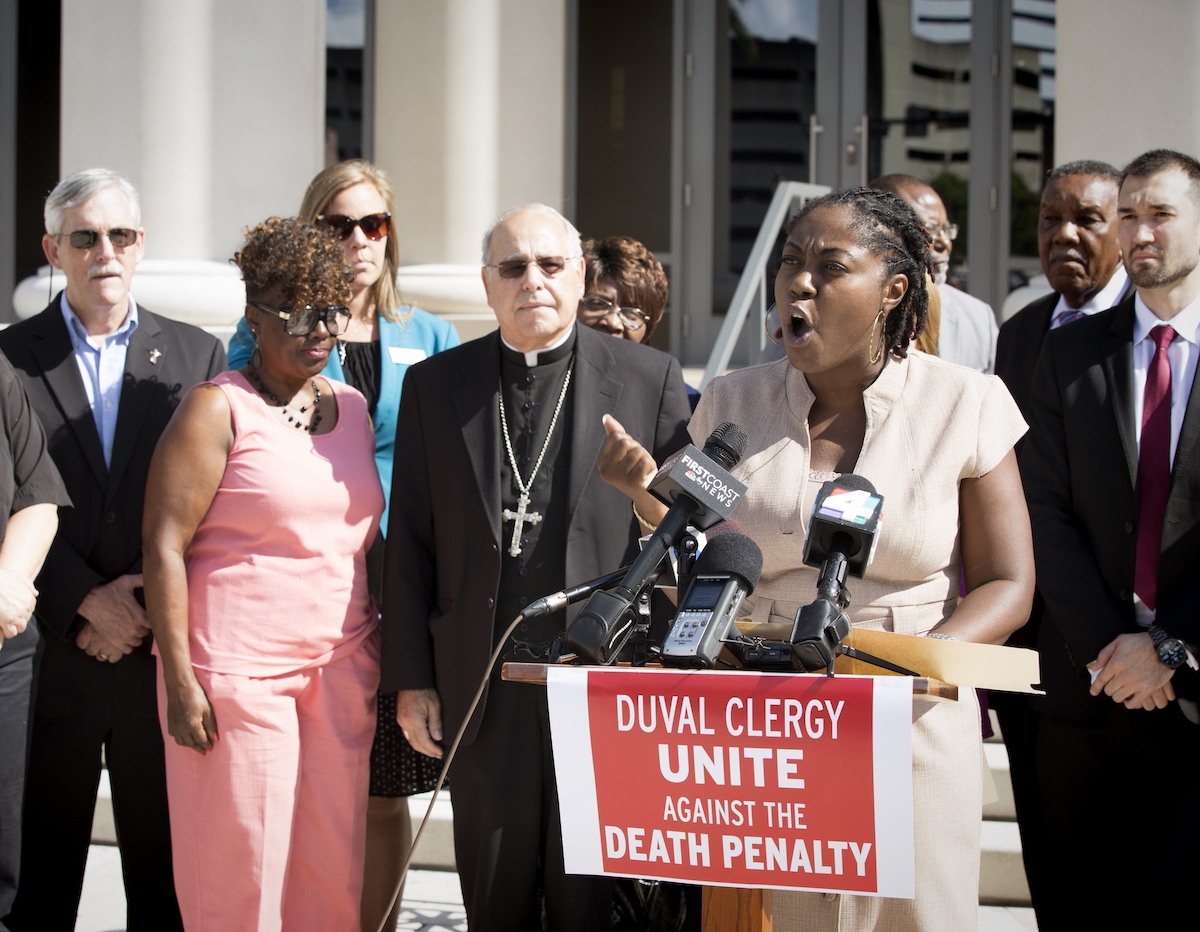
Press Conference at Duval County Courthouse

A new report from Harvard’s Fair Punishment Project found that the few counties that still use the death penalty are highly dysfunctional. One of the counties they identified is Duval County, Florida – a place where EJUSA organizer, Christine Henderson, lives and works. Christine and our local allies were outraged that their hometown’s record on the death penalty was so abysmal that it earned a national spotlight. We worked with local residents to respond to the report and call for an end to the death penalty.

The day after the report was released, EJUSA hosted a press conference of local religious leaders on the steps of the County Courthouse. They delivered a letter signed by over 50 of their local colleagues, asking the State Attorney’s office for the district to suspend its use of the death penalty.

“Duval County has gained the dubious distinction of sentencing individuals to death at one of the highest rates in the country,” the letter said. “That troubles us, especially given that our corrections system today can keep society safe without needing to resort to executions.”

Duval County has also received national attention for its treatment of Darlene Farah, whose daughter, Shelby, was murdered in 2013. Darlene has been asking prosecutors to take the death penalty off the table so that her family can continue the healing process away from the constant courtroom drama. The prosecutors have refused. The New York Times Magazine highlighted Darlene’s story in its hard-hitting coverage of the “Outlier Counties” report.

The following week, murder victims’ family members from around the country joined with Darlene, signing a letter organized by EJUSA and Murder Victims Families for Reconciliation, once again calling on the State Attorney’s Office to halt use of the death penalty.

“Duval County has sought the death penalty with essentially no regard for the harm it causes murder victims’ families,” said Shari Silberstein, Executive Director of EJUSA. “In less than a year, Florida’s death penalty law has been struck down twice as unconstitutional, leaving it in legal limbo. It’s the surviving families who are left to suffer the inevitable uncertainty of a death sentence. It’s no surprise that Darlene Farah has fought so hard to avoid such a fate.”

The local action and national attention on Duval County are just the beginning. With the death penalty isolated to just a few outlier counties, the pressure on prosecutors to curb capital punishment will continue to grow.

The outlier county report was published by the Fair Punishment Project, a project of the Charles Hamilton Houston Institute for Race and Justice at Harvard Law School. The Project identified the 16 counties – out of 3,143 in the country – that produced 5 or more death sentences between 2010 and 2015. In Part I of its report, “Too Broken to Fix: An In-depth Look at America’s Outlier Death Penalty Counties,” it looks at 8 of those 16 counties and shows that where the death penalty is most prolific, it is also most dysfunctional. The outlier counties are plagued by persistent problems of overzealous prosecutors, ineffective defense lawyers, and racial bias. The impact of these systemic problems include the conviction of innocent people and the excessively harsh punishment of people with significant impairments.

Photo credit: Brandon Duncan, Roman Catholic Diocese of St. Augustine

Filed under: Ready for launch