Shortly after last month’s tragic mass shooting in Orlando, the American Medical Association declared gun violence a public health issue.
EJUSA believes that this powerful frame applies to all violence. Public health models prioritize prevention, harm reduction, as well as trauma treatment. By completely changing the narrative on violence, its causes, and its solutions, we believe we will truly transform the justice system.
To advance our vision for justice transformation, EJUSA went to the White House to begin that discussion last month. Trauma and violence experts, city health department officials from Boston, Philadelphia, and Baltimore, crime survivors, public health and criminal justice reform advocates, and more joined us for a robust dialogue with federal agents across many agencies. The meeting has already sparked other collaborations and new opportunities for action among participants.
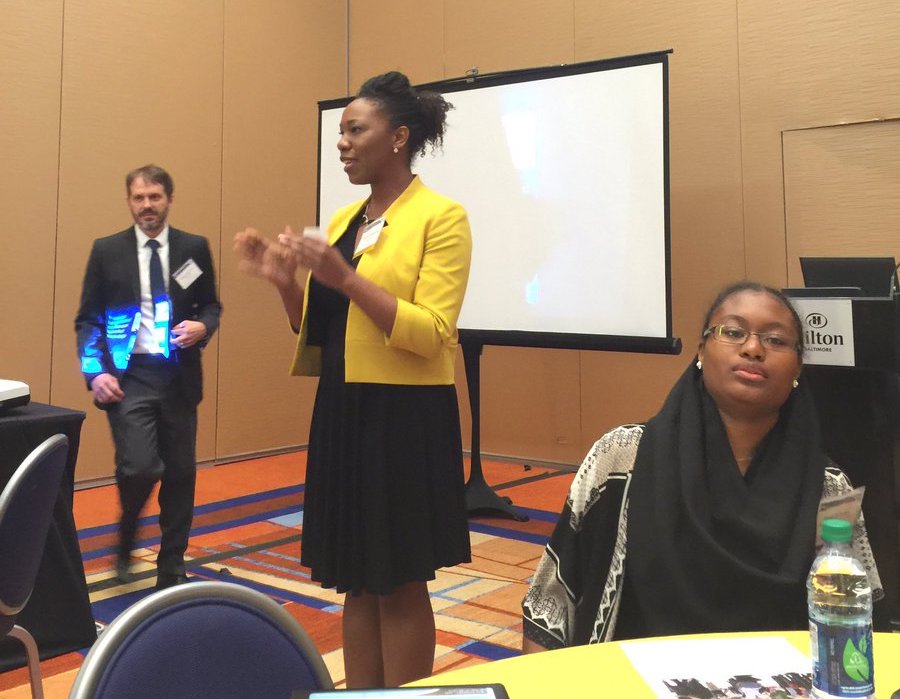
One of those opportunities included EJUSA’s collaborative workshop at the Department of Justice National Forum on Youth Violence Prevention together with Cure Violence, an organization known for its public health violence prevention programs. (You may have seen them profiled in the excellent movie, The Interrupters.)
Our workshop, called Race, Trauma and Disrupting the Cycle of Violence: From Local Programs to Broad Movement, discussed the work of our respective organizations and our contribution to the larger movement to reframe violence. While the violence prevention field has produced so many examples of local programs and initiatives that frame violence as a public health issue, those programs have not been brought to scale. And public understanding of how to address violence is still disconnected from these great programs.
Our workshop sought to bridge that gap by exploring what makes a movement and how to grow this field from local programs to a broad force for change. EJUSA presented our movement building framework, which includes six elements:
- Data and research on the problem and its solutions
- Proof of concept, or examples of the solutions in action
- Narrative shifting that changes the framing and cultural meaning of an issue
- Campaigns to change policies or systems at the local, state, and federal levels
- Grassroots capacity building that builds leadership of those most impacted
- National coordination
Many of the local programs in the workshop were able to see their excellent work as examples of #2 – proofs of concept. Their programs show the world what’s possible, and inspire people to believe that solutions work. It is then up to advocates to work with practitioners and impacted communities to lift those models through communications and campaigns, so they can be replicated and expanded. By understanding how advocates’, practitioners’, and communities’ work complement each other, it is easier to imagine a cohesive movement where all the pieces are working in coordination.
The movement building workshop punctuated a powerful set of main-stage speakers who highlighted both challenges and success stories in education, crime prevention, trauma response. Sessions highlighted the unique needs of young men of color, as well as the broader challenge of racial bias in transforming our responses to violence. Jet Magazine’s story of the Summit features EJUSA’s Trauma Advocacy Initiative Director, Fatimah Loren Muhammad.
